
Every year, Earth Day encourages people to think about their relationship with the environment. While conversations often focus on reducing waste, cutting emissions, or protecting forests, another powerful solution deserves equal attention: empowering communities through sustainable agriculture.
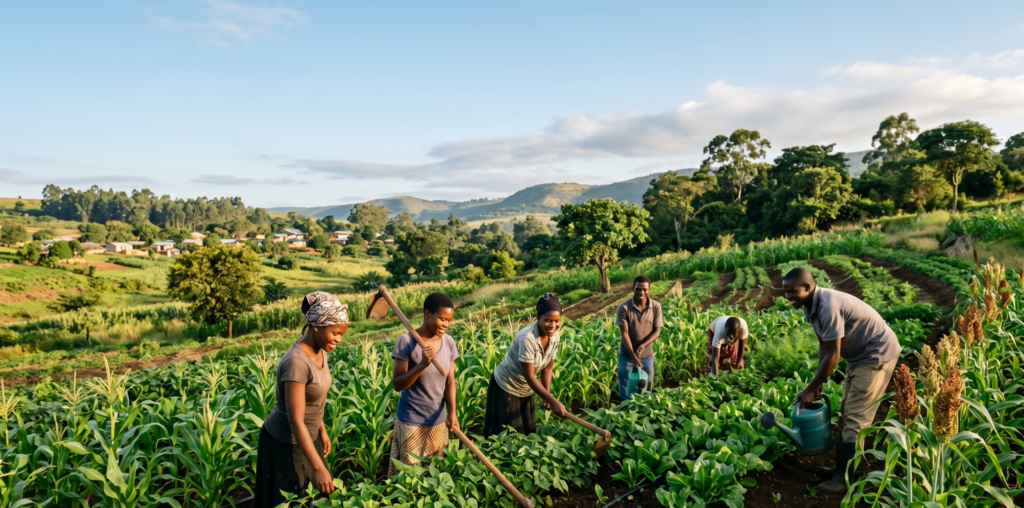
Across many parts of Africa and other developing regions, sustainable farming practices are helping families secure their livelihoods while adapting to an increasingly unpredictable climate. These efforts show that meaningful environmental progress starts with practical action at the community level.
This Earth Day 2026, the conversation goes beyond awareness and highlights a simple but important idea. Real climate action begins with people.
The Growing Need for Sustainable Agriculture
For millions of people around the world, agriculture is more than an industry. It is the primary source of income, nutrition, and economic stability.
However, farmers today face challenges that continue to grow. Unpredictable rainfall, rising temperatures, drought conditions, and pressure on natural resources make traditional farming methods harder to sustain.
Sustainable agriculture offers a long term approach to these challenges.
Rather than focusing only on producing more, this approach aims to improve productivity while protecting the environment. Farmers are adopting practices that support healthier ecosystems and more reliable harvests.
Some of these practices include:
- Improving soil health
- Using water more efficiently
- Rotating crops
- Diversifying farming systems
- Reducing environmental impact
These methods not only support agricultural production but also create stronger and more resilient communities.
Why Education Plays a Critical Role in Climate Solutions
Access to education continues to be one of the most effective tools for environmental progress.
When young people gain practical agricultural knowledge and opportunities to learn, they become better prepared to solve local challenges. Education encourages innovation and allows communities to adopt solutions that fit their unique environmental conditions.
Many young women are also becoming important contributors to sustainable agriculture initiatives. Through skills, training, and leadership opportunities, they are helping strengthen both local economies and environmental outcomes.
The impact often follows a simple path:
Education creates knowledge.
Knowledge drives innovation.
Innovation creates lasting community change.
Turning Individual Efforts Into Community Progress
Climate resilience becomes more effective when communities work together.
Local leaders, agricultural educators, and experienced farmers are helping spread practical knowledge through training sessions, demonstrations, and collaborative learning.
These shared efforts create benefits that extend far beyond farming.
Communities experience:
- Improved food security
- Greater environmental awareness
- Stronger local economic opportunities
- Better preparation for climate related disruptions
- Expanded opportunities for future generations
Small improvements made consistently across communities can lead to meaningful environmental results over time.
Creating a Future That Supports People and the Planet
Earth Day is not only about recognizing environmental challenges. It is also an opportunity to highlight solutions that are already making a difference.
Sustainable agriculture shows that effective climate action does not always depend on expensive technologies or large scale infrastructure. In many cases, lasting progress begins with knowledge, collaboration, and better use of existing resources.
As more communities invest in climate smart agricultural practices and education, they create systems that support both economic growth and environmental responsibility.
Supporting people and protecting the planet are not separate goals. They move forward together.
Conclusion
The future of sustainability depends on actions that communities can adopt and maintain over time.
Sustainable agriculture demonstrates that environmental protection, economic opportunity, and social progress can work side by side.
This Earth Day 2026 serves as a reminder that long lasting change often begins locally. One community, one idea, and one action can create an impact that reaches far beyond today.
