
For generations, agriculture has been viewed through a simple lens: produce more, harvest more, and meet growing demand. While productivity remains important, the conversation around agriculture is changing rapidly.
Today, the industry stands at the intersection of sustainability, innovation, food security, and environmental responsibility. Around the world, agricultural systems are evolving to create value that goes beyond production numbers and focuses on long term resilience.
The future of farming is no longer measured only by how much we grow. It is increasingly measured by how responsibly and efficiently we grow it.
Agriculture Is Entering a New Phase of Development
Traditional agricultural success often focused on yield, output, and operational efficiency. Although those factors still matter, they are no longer enough to define long term progress.
Modern agriculture now faces a broader set of expectations.
Industry leaders, researchers, and producers are asking important questions:
- How can farms maintain productivity while protecting natural resources?
- What role should technology play in reducing waste?
- How can agricultural operations adapt to changing environmental conditions?
- How can innovation become accessible to both small and large scale producers?
These questions are shaping agricultural strategies across global markets.
Technology Is Transforming Agricultural Decision Making
Technology has become a practical requirement rather than an optional advantage.
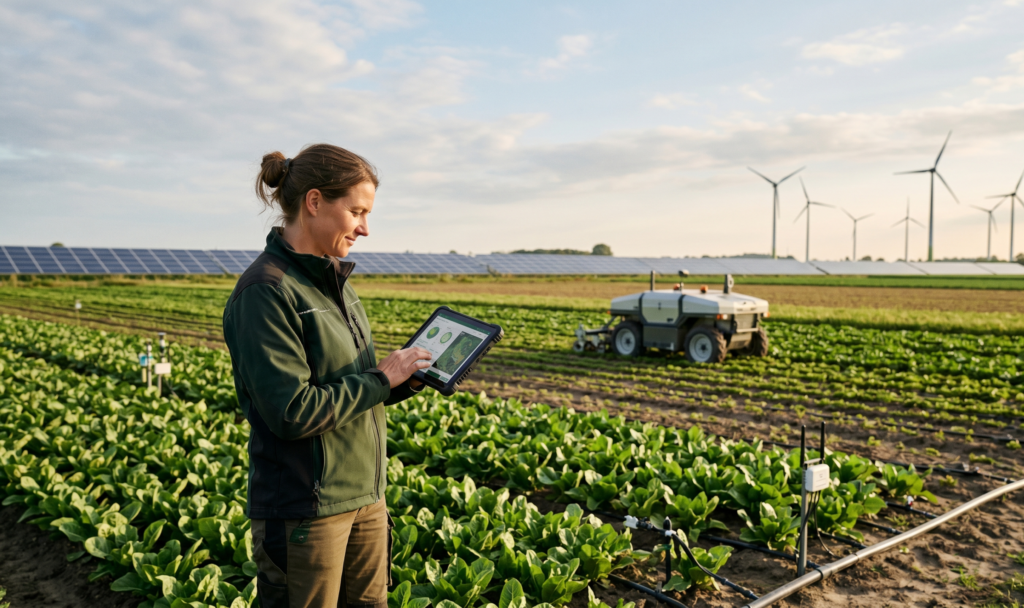
Advanced tools are helping producers make more informed decisions at every stage of agricultural operations. From precision farming and digital monitoring to intelligent planning systems and efficient irrigation methods, technology is improving both productivity and resource management.
Access to better data is also creating stronger supply chains.
Businesses and producers can identify trends earlier, forecast demand more accurately, and respond to challenges before they become larger issues.
The goal is not simply modernization. The goal is smarter and more sustainable agricultural management.
Sustainability Is Becoming a Core Agricultural Standard
Sustainability is no longer treated as a separate initiative. It is becoming a central part of agricultural planning and growth.
Across the sector, organizations are focusing on practices that support:
- Stronger soil health
- Better water efficiency
- Lower environmental impact
- Climate adaptation
- Long term agricultural performance
Consumer expectations are also changing.
People want greater transparency around how food is produced and how resources are managed. This shift is encouraging businesses to strengthen responsible sourcing and sustainable production practices.
Collaboration Will Shape the Next Generation of Agriculture
Agriculture cannot advance through isolated efforts.
Meaningful progress happens when multiple stakeholders work toward shared goals.
Researchers contribute new discoveries. Businesses expand adoption. Policymakers build supportive frameworks. Farmers bring practical field knowledge and real world experience.
When collaboration increases, innovation becomes easier to implement and more effective at scale.
Global knowledge sharing is helping agriculture move toward systems that are more connected, adaptable, and future ready.
Conclusion
Agriculture is moving into a new era where growth and responsibility must work together.
Success in the years ahead will belong to organizations and producers that combine productivity with sustainability, embrace practical innovation, and remain flexible in a changing world.
Feeding future generations is not only about increasing output. It is about creating agricultural systems that support people, protect resources, and remain sustainable for the long term.
