
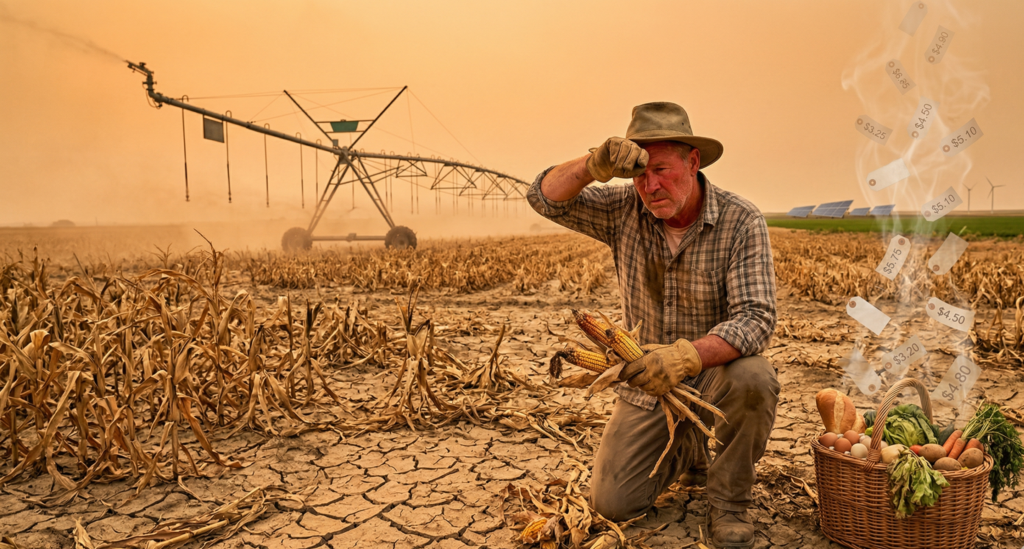
Farmers across the globe are confronting an increasingly harsh reality. Extreme weather, including prolonged droughts and record-breaking heat waves, is disrupting crop production and driving up food costs. Recent studies highlight that these climate impacts pose serious risks to food security, particularly in regions already vulnerable to shortages.
In the United States, areas like the Midwest and Southern states are experiencing severe dryness that has slashed yields for essential crops such as corn and soybeans. Fields that once flourished with healthy plants now reveal cracked soil and stunted growth. Some farmers report losing up to 20 percent of their harvests, forcing them to purchase additional feed or sell livestock earlier than planned. These disruptions ripple through supply chains, increasing prices for everyday items like bread, dairy, and meat.
The challenges extend far beyond the U.S. In India and parts of Africa, intense heat waves have wilted wheat and rice crops during critical growth periods. For example, last summer, South Asia faced record-high temperatures that delayed planting seasons and reduced the quality of grains. While governments have introduced subsidies to support farmers, experts caution that these short-term measures cannot address the underlying problem. Climate projections indicate that extreme weather events will become more frequent and prolonged in the coming years.
The impact on consumers is tangible. Reduced crop production tightens markets, causing basic food items—eggs, milk, vegetables—to rise by 10 to 15 percent in affected regions over the past year. Low-income families are disproportionately affected, spending a larger portion of their budgets on food. Economists warn that without significant adaptation measures, grocery inflation may persist.
Building Resilience in Agriculture
Despite these challenges, there is room for optimism through innovation. Farmers are increasingly using drought-resistant seeds, precision irrigation systems powered by advanced technology, and cover cropping techniques to preserve soil moisture. In California, for instance, tech-driven water management has improved crop yields by 25 percent even during dry periods. Governments and private companies are investing in agricultural technologies, including blockchain for supply chain transparency and renewable energy solutions for sustainable greenhouses.
Policymakers also play a crucial role. Expanding crop insurance, funding research on climate-smart agriculture, and encouraging sustainable practices can provide protection against climate shocks. International collaboration, such as sharing resilient crop varieties, may help prevent global price spikes.
As consumers, we can contribute by prioritizing local and seasonal produce and supporting brands that emphasize sustainability. The connection between extreme weather and rising food costs is clear. Taking action today can help build a food system that withstands climate pressures and protects both farmers and consumers.
What steps will you take to support climate-resilient farming in your community?
