
The latest edition of World Agri-Tech 2026 highlighted a clear shift in how the global agriculture sector is evolving. With climate uncertainty and food security becoming more pressing, industry leaders are turning to smarter technologies and sustainable methods to future-proof farming.
This year’s discussions revealed how artificial intelligence, automation, and eco-friendly practices are no longer optional. They are becoming essential tools for farmers who want to stay competitive and resilient.
Key Innovations Driving Agriculture in 2026
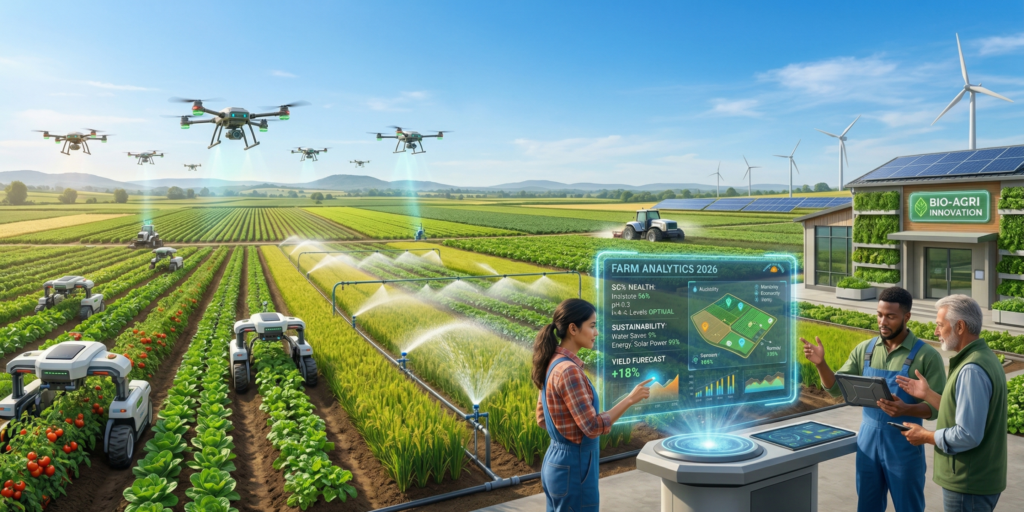
One of the most significant developments is the rapid adoption of artificial intelligence and automation in farming operations. These technologies are helping farmers make better decisions while reducing manual effort.
AI-powered tools are now being used for precise crop monitoring. Farmers can track plant health, predict yields, and detect issues early using real-time data. At the same time, automated machinery is improving efficiency in tasks such as planting, spraying, and harvesting.
Another major highlight is the strong recovery in agri-tech funding. In 2025, investments crossed 2.3 billion dollars, with a large portion directed toward early-stage startups. These startups are focusing on turning innovative ideas into practical, market-ready solutions.
Collaboration also played a key role. Companies are increasingly working together to integrate robotics with advanced data systems. This approach ensures that new technologies are not just developed but also effectively implemented on the ground.
Growing Focus on Sustainability in Farming
Sustainability continues to be at the center of agricultural innovation. Farmers and businesses are actively looking for ways to reduce environmental impact while maintaining productivity.
Soil health solutions are gaining attention. Techniques such as biochar application and advanced microbiology are helping improve soil fertility naturally. These methods reduce the need for chemical fertilizers and strengthen long-term soil resilience.
Water management is another critical area. With water scarcity becoming a global concern, smart irrigation systems and hydro-based solutions are being widely adopted. These technologies allow farmers to use water more efficiently and minimize waste.
In addition, carbon credit programs are expanding rapidly. Farmers can now earn incentives by adopting practices that capture and store carbon. This not only supports sustainability goals but also creates an additional income stream.
What Lies Ahead for the Agriculture Sector
Looking ahead, labor shortages are expected to accelerate the adoption of robotics. Automated systems for harvesting and livestock monitoring are becoming more reliable and cost-effective.
Data sharing is also transforming the industry. Modern platforms allow farmers to access shared insights, helping them make informed decisions based on collective knowledge.
At the business level, new models are emerging. Many producers are moving toward direct-to-consumer sales, which helps them increase margins and build stronger relationships with customers. At the same time, circular economy practices are gaining traction, where agricultural byproducts are reused to create additional value.
Conclusion
World Agri-Tech 2026 made it clear that agriculture is entering a new phase. Technology and sustainability are no longer separate paths. They are working together to create a more efficient and resilient farming ecosystem.
As the industry moves forward, farmers who adopt these innovations early will be better positioned to handle future challenges and opportunities. The changes we are seeing today are not temporary trends but the foundation of modern agriculture in 2026 and beyond.
