
Recent IWMI research shows that climate change is increasing stress on farming systems worldwide. Rising temperatures, irregular rainfall, and longer dry periods are making traditional irrigation less reliable.
Farmers are now adapting quickly because water availability is becoming unpredictable. Poor water management can increase risks like groundwater depletion and flooding.
This issue is especially serious in South Asia and parts of Africa. These regions still depend heavily on seasonal rainfall for agriculture.
Solar irrigation is growing, but needs responsible use
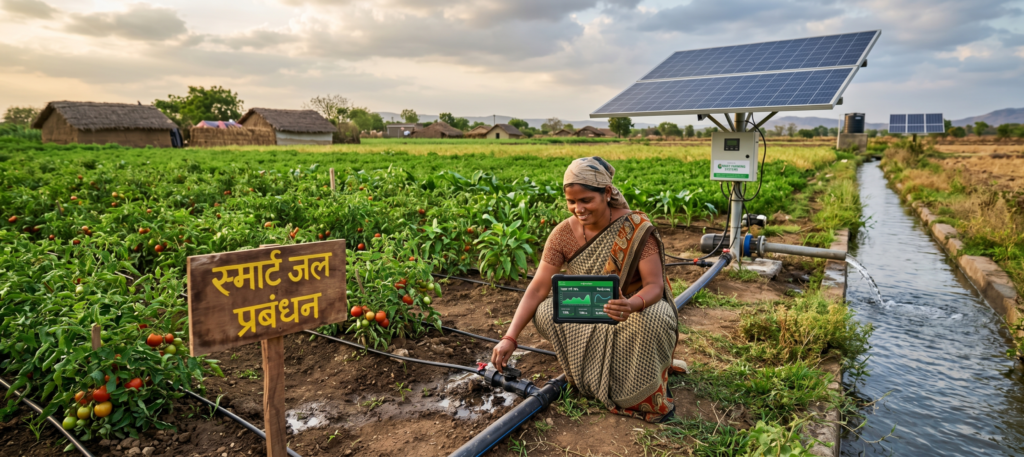
Solar-powered irrigation systems are becoming more popular. Farmers prefer them because they are cleaner and cheaper than diesel pumps. These systems also reduce fuel costs and lower carbon emissions. They improve irrigation access in rural and off-grid areas.
However, researchers warn about a key issue. Cheaper irrigation can increase water use. In some cases, farmers extract too much groundwater.
This creates a challenge. Clean energy can still harm water resources if people do not manage it properly.
Experts recommend stronger policies. These should combine solar irrigation with groundwater monitoring, crop planning, and water-saving incentives.
Digital tools are improving irrigation efficiency
Digital technology is changing agriculture. Farmers now use data-based tools to manage water more efficiently. These tools combine weather forecasts, soil data, and crop needs.
They help farmers apply the right amount of water at the right time. This reduces water waste and improves crop health.
In Africa and Asia, pilot projects show strong results. Farmers, researchers, and governments are working together. This collaboration helps create practical water solutions that last longer.
Water access plays a key role in food security
IWMI research confirms a strong link between water access and food security. Farmers produce better crops when irrigation systems work well. They also earn higher incomes and achieve better nutrition outcomes.
Even small improvements in irrigation can create big changes. This is especially true for small farmers who depend on rainfall.
Better water access increases productivity. It also helps stabilize food supply in vulnerable regions.
Global cooperation is shaping water solutions
Water problems affect many countries. Because of this, global cooperation is becoming more important.
IWMI works across South Asia, Sub-Saharan Africa, and other regions. It promotes knowledge sharing between countries. This helps scale successful irrigation models.
Each region adapts these models to local conditions. This makes solutions more effective and practical.
The main goal is clear. Build farming systems that save water, use energy efficiently, and support food production.
Conclusion
Recent IWMI findings give a clear message. Food security depends on smart water management, not just more water use.
New solutions like solar irrigation, digital tools, and better policies are improving agriculture. These changes also protect water resources and ecosystems.
