

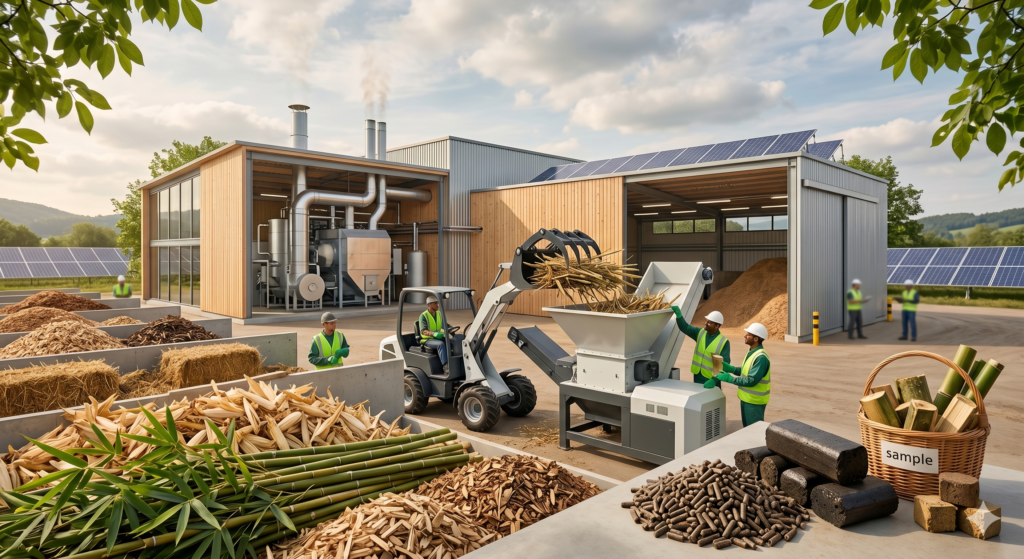
As the global demand for cleaner and more affordable energy continues to rise, attention is shifting toward resources that have long been ignored. In countries like the Philippines, bamboo and agro-forest waste are gaining recognition as reliable raw materials for biomass fuel. These locally available resources offer a promising alternative to dependence on imported energy.
Biomass energy stands out because it transforms plant-based waste into usable fuel. Instead of being discarded or burned inefficiently, agricultural residues can be converted into structured fuel forms. Among these resources, bamboo has emerged as one of the most practical options due to its rapid growth and adaptability.
Why Bamboo Is Ideal for Biomass Energy
Bamboo offers several natural advantages that make it highly suitable for energy production. It grows quickly, regenerates after harvesting, and thrives in diverse environmental conditions. Unlike traditional fuel crops that require long growth cycles, bamboo can be harvested repeatedly within shorter timeframes.
This makes it a dependable and sustainable source of raw material. Once processed, bamboo can be converted into pellets or charcoal briquettes, both of which are far more efficient than loose agricultural waste in terms of storage, transportation, and usage.
The Practical Value of Pellets and Briquettes
Processed bamboo fuels are designed to improve efficiency and usability. Bamboo pellets, for instance, are compact and uniform in size. This consistency makes them easy to handle and ensures a stable and higher heat output compared to many conventional fuels.
Charcoal briquettes made from agro-forest waste provide another effective solution. They burn steadily, produce less smoke, and make use of materials that would otherwise go to waste. These qualities make them suitable for both household cooking and small-scale industrial use.
In addition, these biomass products can support larger energy systems. They can be used alongside traditional fuels in co-firing processes, helping reduce reliance on coal without requiring complete infrastructure changes.
Environmental Advantages of Biomass Solutions
Using bamboo and agro-forest waste as fuel contributes directly to environmental sustainability. It reduces reliance on fossil fuels and supports efforts to lower greenhouse gas emissions. Compared to inefficient burning methods, structured biomass fuels offer cleaner combustion and better energy efficiency.
Another key advantage lies in land use. Bamboo can grow on degraded or less fertile land, meaning it does not compete directly with food crops. This makes it an ideal candidate for energy production without affecting agricultural productivity.
Building a Circular Energy System
The real potential of bamboo-based biomass goes beyond energy production. It represents an opportunity to build a circular system where agricultural and forest residues are reintegrated into the economy.
By turning waste into valuable fuel, communities can reduce environmental impact while creating new income streams. This approach strengthens local energy security and reduces dependence on external resources.
If developed responsibly, bamboo biomass can become an important part of a diversified clean energy mix. It offers a practical pathway for governments, industries, and communities to move toward more sustainable and resilient energy systems.
Conclusion
Bamboo and agro-forest waste are no longer just byproducts of nature. They are emerging as key components of a cleaner energy future. With the right investment and responsible development, these resources can help create a more sustainable, efficient, and locally driven energy ecosystem.
