
Sustainable agriculture is shaping up to be one of the most attractive investment sectors in 2026, combining steady financial returns with measurable environmental benefits. As global food demand rises and climate challenges become more urgent, investors are increasingly focusing on solutions that offer long-term resilience and sustainability.
Innovations such as regenerative farming and advanced agricultural technologies are transforming the sector. These developments are not only improving productivity but also opening new avenues for investors seeking impact-driven growth.
Market Drivers Supporting Growth
The shift toward sustainable agriculture is being driven by growing food demand and increasing environmental pressures. Traditional farming methods are gradually giving way to practices that protect soil health and optimize natural resources.
Regenerative agriculture is gaining traction as it improves soil quality through methods like crop rotation and reduced chemical usage. At the same time, governments are stepping in with strong financial support. For example, Australia has committed significant funding to climate-smart agriculture initiatives, encouraging the adoption of eco-friendly practices.
These combined factors are creating a favorable environment for investments in sustainable land use and agricultural innovation.
Key Investment Opportunities
Several areas within sustainable agriculture are showing strong potential in 2026. These opportunities combine technology, efficiency, and environmental responsibility.
| Opportunity Area | Focus Area | Potential Benefit |
|---|---|---|
| Regenerative Farming | Soil restoration, crop rotation | Higher long-term yields and carbon credit potential |
| Agtech Adoption | Drones, automation, smart irrigation | Cost savings and improved scalability |
| Climate-Resilient Crops | Drought-resistant seeds | Reduced risk from climate variability |
| Data and ESG Platforms | Reporting and compliance tools | Stronger investor confidence and regulatory alignment |
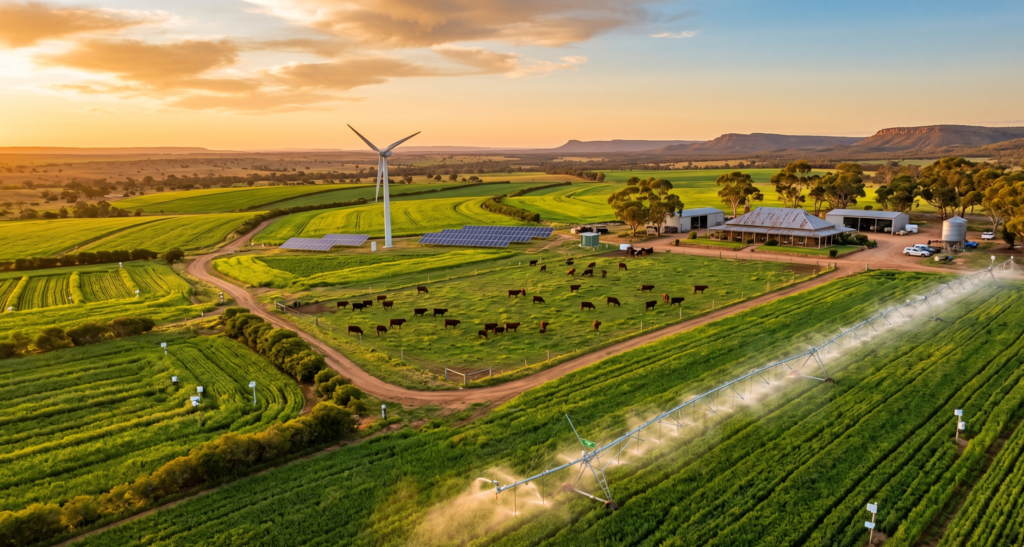
Australia stands out as a key region with vast agricultural land, much of which remains underutilized for sustainable practices. The use of AI-based irrigation, IoT sensors, and blockchain systems is improving efficiency and bringing transparency to supply chains.
Government Support and Policy Push
Government initiatives are playing a major role in accelerating the transition toward sustainable farming. Programs like the Farms of the Future grants in New South Wales are helping farmers adopt modern technologies by offering financial assistance.
Such policies reduce the initial investment burden and make the sector more accessible to new investors. In addition, many funding programs now require data tracking and performance reporting, which is improving accountability across the industry.
Risks and Investment Strategy
While the sector offers strong growth potential, it also comes with certain risks. Weather fluctuations and policy changes can affect returns. However, these risks can be managed with careful planning.
Diversification is essential. Investors can balance their portfolios by combining farmland investments with agtech ventures. Focusing on businesses with proven sustainability performance can also reduce uncertainty.
Starting with smaller investments through specialized funds can help investors understand the market before scaling up.
Strategic Action for Investors
Investors interested in sustainable agriculture should begin by researching reliable platforms and tracking industry trends. Staying updated with market forecasts and connecting with professionals can help identify the right opportunities.
Aligning investments with sustainability goals and long-term trends can create a strong foundation for consistent and impact-focused returns.
