
Agriculture is undergoing a major transformation. With rising population demands and increasing climate challenges, sustainable farming is no longer optional. It has become a practical necessity for farmers, agribusinesses, and policymakers alike.
In 2026, the focus is shifting toward smarter, resource-efficient farming practices that not only increase productivity but also protect natural ecosystems. From data-driven tools to eco-friendly techniques, innovation is redefining how food is grown.
Here are five key innovations that are driving the future of sustainable farming.
1. Precision Agriculture Powered by Data
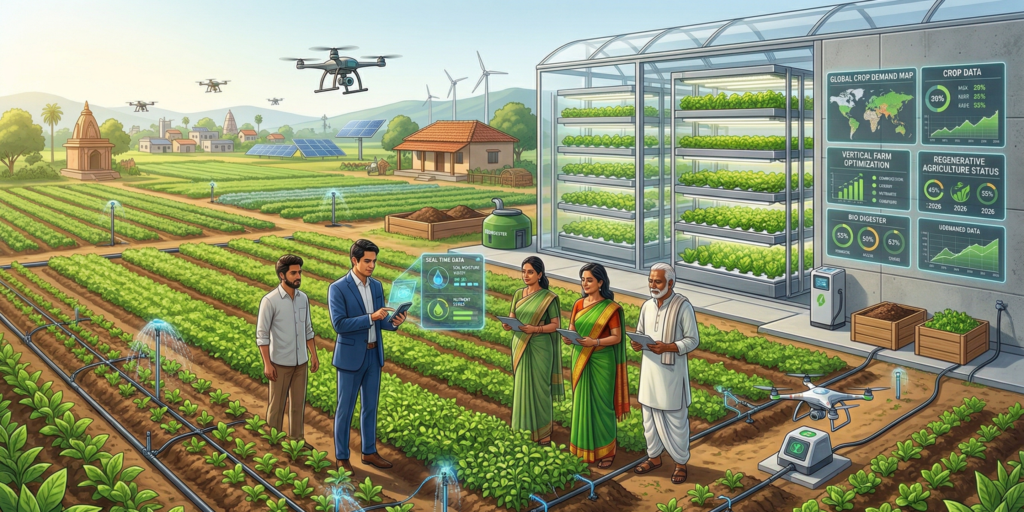
Precision agriculture is changing how farmers manage their fields. By using technologies such as GPS mapping, soil sensors, and satellite monitoring, farmers can track crop health, soil moisture, and nutrient levels with high accuracy.
Instead of treating an entire field the same way, farmers can apply water, fertilizers, and pesticides only where they are needed. This targeted approach helps reduce waste, lower costs, and minimize environmental damage.
With the integration of mobile apps and digital dashboards, even small-scale farmers can make informed decisions quickly and respond better to changing weather conditions or pest outbreaks.
2. Smart Irrigation for Efficient Water Use
Water scarcity remains a serious concern, especially in countries like India. Smart irrigation systems are helping farmers tackle this challenge by delivering water more efficiently.
Modern systems use sensors and automated controls to monitor soil moisture and weather conditions. Based on this data, water is supplied in precise quantities at the right time.
Technologies such as drip irrigation and micro-sprinklers not only conserve water but also improve crop quality. In many cases, farms can reduce water usage significantly while maintaining or even increasing yields.
3. Regenerative and Soil-Friendly Farming Practices
Healthy soil is the foundation of sustainable agriculture. Regenerative farming focuses on improving soil quality and restoring natural ecosystems.
Practices such as crop rotation, reduced tillage, and cover cropping help increase soil fertility and reduce erosion. Integrating livestock into farming systems can further enhance soil health when managed properly.
These methods also reduce dependence on chemical fertilizers and pesticides. Over time, they create more resilient farms that can better withstand droughts and climate variability.
4. Vertical and Urban Farming Solutions
As urban areas expand and farmland becomes limited, vertical and urban farming are emerging as practical alternatives.
These systems grow crops indoors or in compact spaces using techniques like hydroponics and aeroponics. Crops are cultivated in controlled environments, often stacked vertically to maximize space.
Urban farming allows fresh produce to be grown closer to consumers, reducing transportation costs and emissions. It also uses less water and land compared to traditional farming, making it ideal for cities and peri-urban areas.
5. AI-Driven Farm Management Tools
Artificial intelligence is playing a growing role in agriculture. AI-powered platforms analyze large amounts of data, including weather forecasts, satellite imagery, and past crop performance.
These tools provide farmers with clear recommendations on planting schedules, fertilizer use, and harvesting times. They can also identify early signs of crop diseases or nutrient deficiencies through image analysis.
By simplifying complex data into practical insights, AI helps farmers improve efficiency, reduce risks, and increase profitability.
Why These Innovations Matter in 2026
The future of farming depends on balancing productivity with sustainability. These innovations are helping farmers adapt to climate change, reduce resource consumption, and meet the growing demand for food.
For governments, investors, and agricultural startups, supporting these technologies is essential. Encouraging adoption at both small and large scales can lead to a more resilient agricultural system.
Sustainable farming is not just about protecting the environment. It is about creating a future where agriculture remains productive, profitable, and capable of feeding generations to come.
