

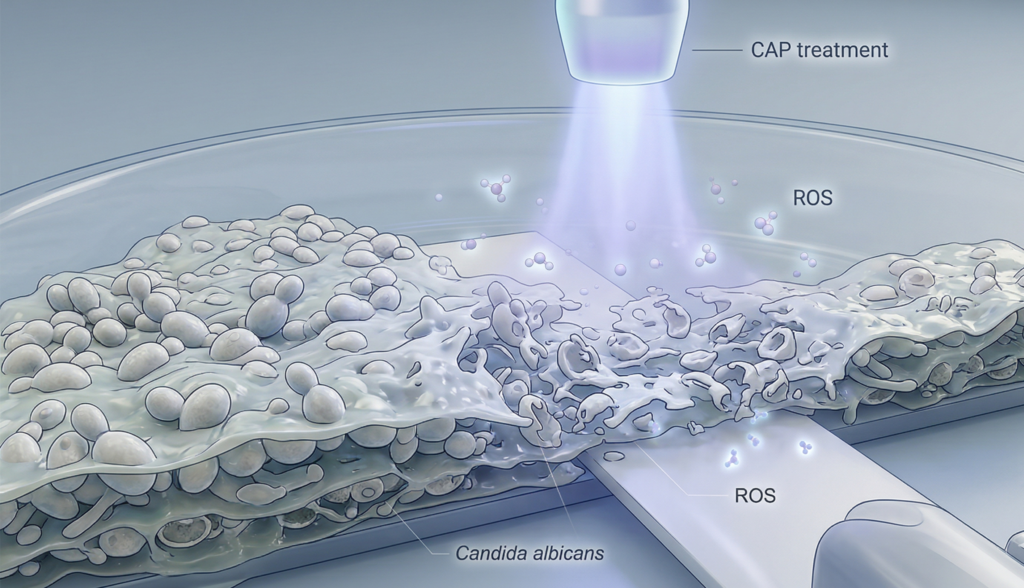
Fungal infections are becoming increasingly difficult to manage, especially when they form protective biofilms. A recent study published in Frontiers in Microbiology highlights an innovative approach using cold atmospheric plasma to effectively target and eliminate these stubborn microbial communities. This research opens up new possibilities for non-drug-based treatments that could reduce dependence on antifungal medications.
Understanding the Challenge of Candida albicans Biofilms
Candida albicans is a common fungus that naturally exists on the human body, particularly on the skin and mucous membranes. While it is usually harmless, it can cause infections when the immune system is weakened.
The real problem begins when this fungus forms biofilms. These are tightly packed communities of cells surrounded by a protective layer that helps them stick to surfaces such as medical devices, implants, and tissues. This structure makes biofilms highly resistant to standard antifungal treatments and disinfectants, leading to persistent and recurring infections.
What is Cold Atmospheric Plasma?
Cold atmospheric plasma is a unique form of ionized gas that operates at or near room temperature. Unlike traditional sterilization methods that rely on heat, this technology can be applied safely to sensitive surfaces and materials.
It works by generating reactive particles, including oxygen and nitrogen species, along with mild electrical effects and low levels of ultraviolet radiation. These elements interact with microbial cells and disrupt their structure, making it an effective tool for eliminating harmful organisms without causing significant damage to surrounding areas.
How Plasma Technology Targets Biofilms
What makes this research particularly important is its focus on optimizing how plasma is applied. Instead of using a standard method, the researchers adjusted several factors such as voltage, gas composition, exposure time, and distance from the target surface.
This fine-tuning allowed the plasma to penetrate deeper into the biofilm structure. As a result, it broke down the protective layer and destroyed the fungal cells more effectively. The study found that certain configurations could significantly reduce the number of active Candida albicans cells in a short amount of time.
Potential Applications in Healthcare and Industry
The use of cold atmospheric plasma could have a wide range of applications. In healthcare, it may be used to disinfect medical equipment such as catheters, dental devices, and wound dressings. This could help reduce infections linked to contaminated devices and lower the need for antifungal drugs.
Beyond hospitals, this technology could also be valuable in industries where hygiene is critical. Food processing units, research laboratories, and manufacturing environments could benefit from plasma-based cleaning systems that prevent microbial buildup and improve safety standards.
Safety Considerations and Future Research
While the results are promising, further research is needed before this technology can be widely adopted. Scientists must ensure that cold atmospheric plasma is safe for use on human tissues and does not harm healthy cells.
Future studies will likely focus on testing this method in more realistic environments and exploring how it can be combined with existing treatments. Developing user-friendly and scalable devices will also be essential for bringing this innovation into everyday use.
Conclusion
Cold atmospheric plasma represents a significant step forward in the fight against resistant fungal infections. By offering a targeted and non-antibiotic approach, it has the potential to transform how biofilms are managed in both medical and industrial settings. With continued research and development, this technology could become a key tool in addressing the growing challenge of antimicrobial resistance.
