
Introduction
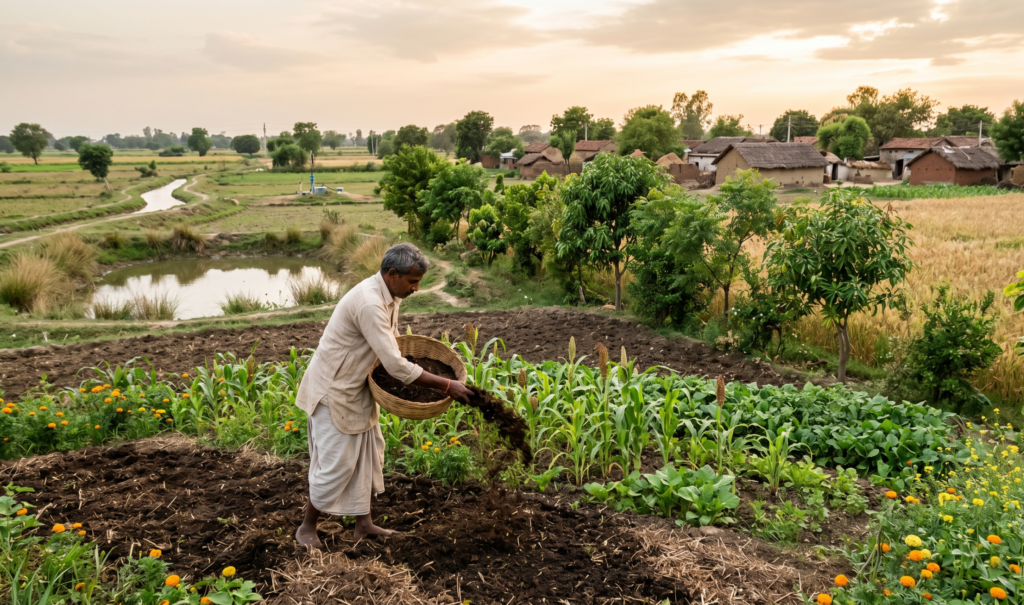
India’s agriculture sector does far more than produce food. Beyond crops and yields, farms across the country quietly support the environment in critical ways. They improve soil health, conserve groundwater, and create habitats for pollinators and beneficial insects. Despite these contributions, farmers rarely receive recognition or financial reward for this ecological work.
Current agricultural policies continue to focus mainly on increasing production. As a result, the environmental role of farming remains largely overlooked in pricing systems and support structures.
The Hidden Environmental Role of Indian Farms
Across diverse regions of India, farms operate as living ecosystems. They help rebuild soil carbon, maintain water cycles, and support biodiversity. These natural processes play a direct role in sustaining agricultural productivity over the long term.
Healthy soil leads to better crop yields. Balanced water systems ensure resilience during droughts. Pollinators and natural predators reduce dependency on chemical inputs. Yet, these benefits are rarely measured or included in how farm performance is evaluated.
Policy Intent vs Ground Reality
In recent years, government policies have started acknowledging the importance of sustainability. Initiatives under the National Mission for Sustainable Agriculture and climate-related strategies highlight soil health, efficient water use, and biodiversity conservation.
However, there is a clear gap between policy language and actual implementation. The mechanisms that directly impact farmer income, such as Minimum Support Price, procurement systems, and subsidies, still operate with a narrow focus on output rather than sustainability.
Why Ecology Is Still Ignored
The roots of this issue go back to the Green Revolution. During that time, the priority was to increase food production rapidly. Policies were designed to support high-yield crops through guaranteed prices and subsidized inputs like fertilizers and pesticides.
This approach successfully improved food security but also created long-term challenges. In many regions, especially North India, intensive farming practices have reduced soil fertility, depleted groundwater, and weakened biodiversity.
Even today, these legacy systems continue to influence agricultural practices. Without structural changes, efforts like crop diversification will not fully address environmental concerns.
The Challenge of Measurement
One of the biggest barriers to reform is the lack of reliable data. India does not yet have a comprehensive system to measure ecological indicators such as soil carbon levels, biodiversity, or water health at the farm level.
Different government departments collect data independently, often using varied methods. This lack of coordination makes it difficult to build systems that can verify environmental improvements and link them to financial incentives.
Without clear measurement, rewarding farmers for ecological services becomes a complex task.
Rethinking Incentives for Farmers
Experts suggest that India needs to redesign its agricultural support systems. One possible approach is to introduce differentiated pricing. For example, farmers using low-input or organic practices could receive higher support prices for crops like millets, pulses, and oilseeds.
At present, farmers who adopt sustainable methods often earn the same as those using intensive chemical inputs. This reduces the motivation to shift towards environmentally friendly practices.
A more effective system would connect ecological outcomes with income support. Improvements in soil health, reduced chemical use, and enhanced biodiversity should translate into direct financial benefits for farmers.
The Way Forward
India’s farms are already contributing significantly to environmental sustainability. However, the current policy framework does not recognize or reward these efforts.
To build a truly sustainable agricultural system, the focus must shift from only production to performance that includes ecological outcomes. This requires coordinated efforts across ministries, better data systems, and redesigned financial incentives.
Conclusion
Sustainable agriculture in India cannot be achieved through policy statements alone. Real change will come when farmers are rewarded not just for what they produce, but also for how they protect and enhance natural resources.
Recognizing ecological services as part of farm income is the next essential step. It will not only support farmers but also secure the future of India’s food systems and environment.
