
Buying fertilizer may soon become much more connected to the farm where it is actually going to be used.
India’s Department of Fertilizers is expanding its Integrated Fertilizer Management System (iFMS) to connect fertilizer purchases with farmer, land and crop information. The move is designed to give authorities a clearer picture of where fertilizer is being sold, where it is moving and whether supplies are reaching the agricultural areas that need them.
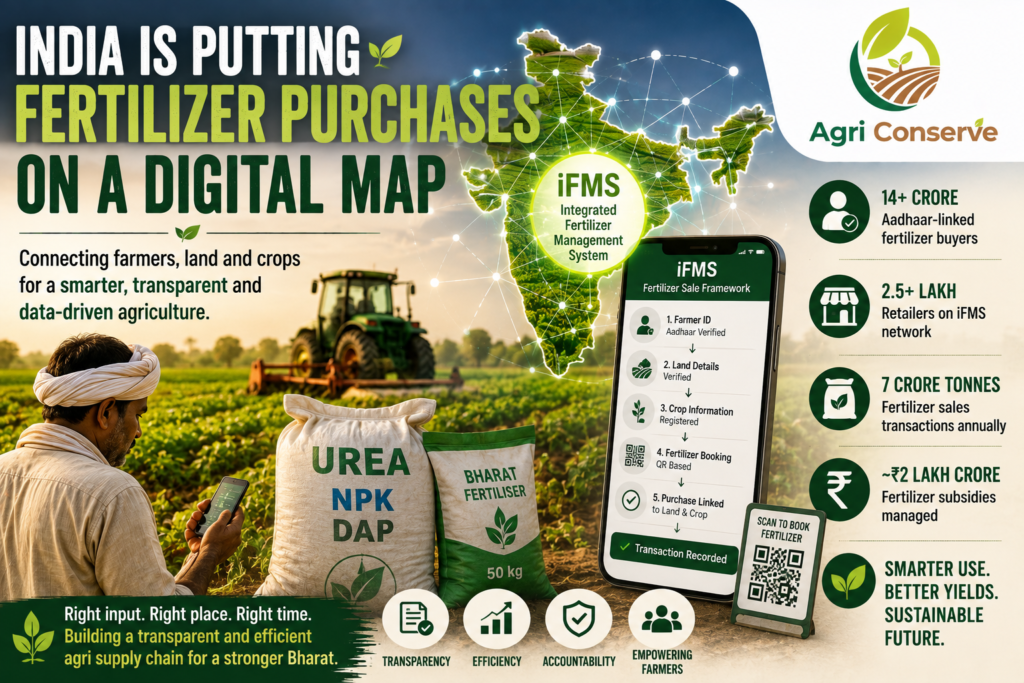
The scale is significant. According to the government, the iFMS ecosystem covers more than 14 crore Aadhaar-linked fertilizer buyers, over 2.5 lakh retailers and around 7 crore tonnes of fertilizer sales transactions every year. It also supports the management of nearly ₹2 lakh crore in fertilizer subsidies.
But the interesting change is that the system is moving beyond simply recording transactions.
From Selling Fertilizer to Understanding Where It Goes
Under the new Framework for Fertilizer Sale, farmers can book fertilizer using an ID created through AgriStack after their land and ownership details are verified.
A QR-based booking can then be matched with the quantity purchased through the retailer’s point-of-sale system.
In practical terms, this creates a digital trail between the farmer, the land, the crop requirement and the fertilizer purchase.
That could make it easier to spot unusual patterns, monitor availability and identify potential gaps in distribution.
It also gives policymakers something agriculture increasingly needs: better information.
Why Data Matters for Fertilizer Use
Fertilizer is one of the most important agricultural inputs, but using more does not necessarily mean producing more.
The right nutrient, in the right quantity, at the right time can improve productivity. Poorly matched application, on the other hand, can increase costs and contribute to environmental problems.
India already uses tools such as Soil Health Cards to encourage more balanced fertilizer management. The government says more than 26 crore Soil Health Cards have been generated, providing farmers with soil nutrient information and crop-specific fertilizer recommendations.
Connecting this kind of information with actual fertilizer purchases could eventually give agricultural authorities a much clearer picture of how inputs are being used.
A Bigger Shift in Agricultural Traceability
There is a broader story here.
Agriculture is becoming increasingly digital—not just in how crops are monitored, but in how inputs move through the supply chain.
Seeds, fertilizer, land records, crop data and farmer services are gradually becoming connected through digital systems.
That could improve transparency and help governments make better decisions about supply, subsidies and agricultural planning.
But the success of such systems will ultimately depend on something simple: whether better data leads to better outcomes for farmers.
Digital agriculture is no longer just about putting information online.
It is about creating a clearer connection between what a farmer needs, what reaches the farm and what happens after it gets there.