
A potentially powerful El Niño is developing, and farmers around the world are watching closely.
El Niño can bring very different weather patterns to different parts of the world—drought in some agricultural regions, excessive rain in others, and unusual heat that can damage crops. Past strong events, particularly those in 1997–98 and 2015–16, caused major disruptions to food production and pushed food prices higher.
But there is one important difference this time: agriculture itself has changed.
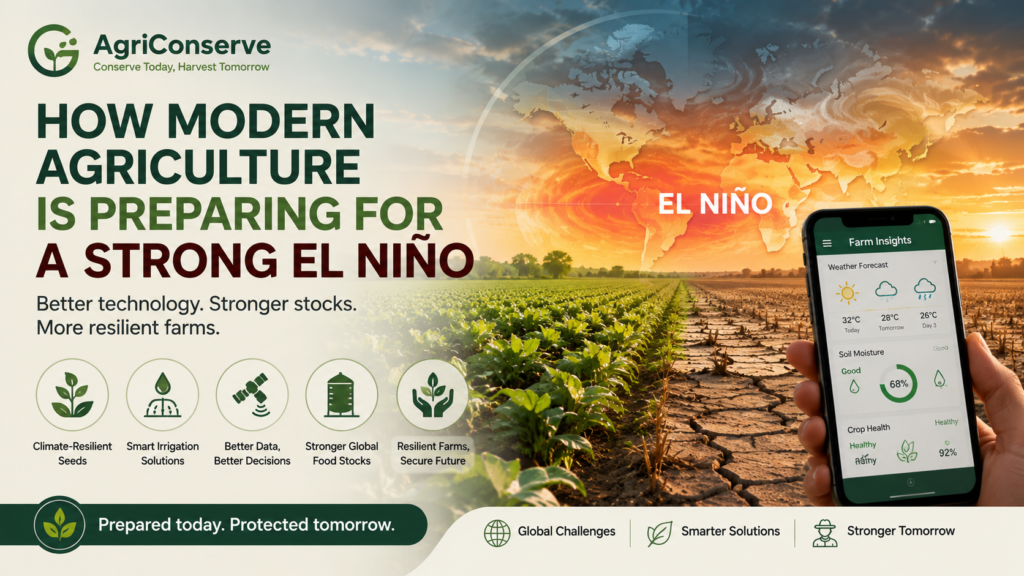
Over the past few decades, farmers have gained access to better seeds, more efficient irrigation, improved crop protection, weather forecasting and increasingly sophisticated digital tools. These changes have made food production more resilient to weather shocks than it was during previous major El Niño events.
Technology Is Giving Farmers More Options
One of the biggest changes has been the development of crop varieties that can tolerate drought, heat or shorter growing seasons. These varieties cannot eliminate climate risk, but they can give farmers a better chance of maintaining production when weather conditions turn difficult.
Precision agriculture is also changing how farmers use water, fertilizer and other inputs. Satellite imagery, soil-moisture monitoring and digital advisory services can help farmers make decisions based on conditions in their own fields rather than relying only on broad regional forecasts.
That matters during an El Niño because weather conditions can vary significantly even between nearby farming areas.
Global Food Stocks Provide Another Buffer
Technology is only part of the story. Global grain and edible-oil inventories are also relatively strong, providing some protection against sudden production losses.
Reuters reports that countries including India and China are holding substantial food stocks, while Brazil and Russia have become much larger exporters of agricultural commodities than they were during earlier major El Niño events. These changes give international markets more ways to compensate when production falls in one region.
That does not mean farmers or consumers are protected from higher prices. A prolonged or unusually severe weather event could still create shortages in specific crops and regions.
The Risk Has Not Disappeared
The biggest lesson from the current situation is not that technology has solved climate-related agricultural risks. It has not.
Farmers are still facing drought, heat, flooding, rising input costs and disruptions to fertilizer and fuel supplies. In some parts of Asia, for example, changing rainfall patterns are already creating concerns for crop production.
El Niño could add another layer of uncertainty later this year and into 2027.
For agriculture, preparedness therefore matters as much as productivity. Better crop varieties, accurate weather information, efficient irrigation, healthy soils and reliable agricultural supply chains can all help farmers absorb shocks when conditions become difficult.
Agriculture Is Becoming More Resilient—But Not Invulnerable
The coming months will show how well today’s agricultural systems can handle a major climate event.
The encouraging part is that farmers now have tools that previous generations did not. The challenge is making sure those tools reach the farmers who need them most.
As climate patterns become harder to predict, the future of agriculture will depend not on one technology or one farming method, but on how effectively research, data, infrastructure and farmer knowledge work together.