
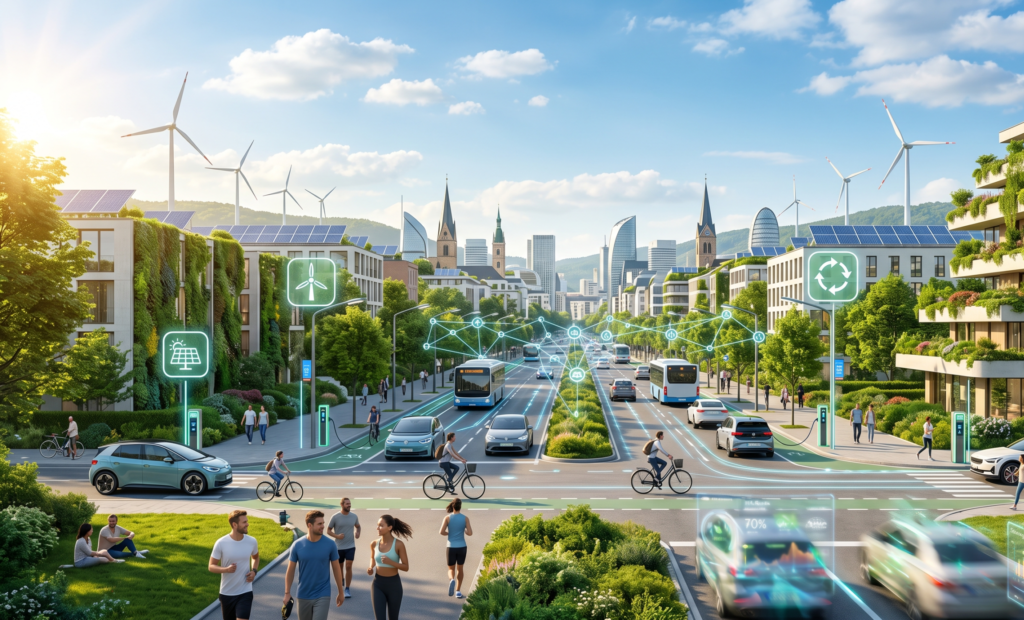
As Europe continues its journey toward a more sustainable future, eco innovation is becoming one of the strongest forces behind environmental and economic progress. From cleaner production methods to circular economy solutions, innovative technologies are helping countries reduce emissions while creating new opportunities for growth. However, recent research shows that not every European nation is moving forward at the same pace.
A new study examining eco innovation across the European Union reveals that although many countries have embraced sustainable technologies, significant differences still exist in their ability to develop and implement green solutions. The findings highlight the need for stronger cooperation, better policies, and increased investment to ensure that all member states can contribute to Europe’s long term climate goals.
What Is Eco Innovation?
Eco innovation refers to the development and adoption of products, technologies, services, and business practices that reduce environmental impact while supporting economic development. It is not limited to creating environmentally friendly products. It also includes improving manufacturing processes, using resources more efficiently, reducing waste, and adopting business models that promote sustainability.
As climate challenges become more urgent, eco innovation is playing an increasingly important role in helping governments and businesses transition toward low carbon economies.
Why Some European Countries Are Leading
The research found that countries with strong innovation ecosystems consistently perform better in eco innovation. These nations typically benefit from supportive government policies, higher investments in research and development, and close collaboration between businesses, universities, and public institutions.
Such partnerships encourage the development of advanced green technologies and help companies bring sustainable solutions to the market more quickly. As a result, these countries are better positioned to improve environmental performance while maintaining economic competitiveness.
Challenges Continue to Slow Progress
Although many European countries have made encouraging progress, the study also identifies several barriers that continue to limit eco innovation in other regions.
Some of the most common challenges include:
- Limited funding for sustainable projects
- Weak environmental policy frameworks
- Lower investment in research and innovation
- Slower adoption of clean technologies by industries
- Insufficient collaboration between key stakeholders
These obstacles create noticeable differences in how effectively countries can implement sustainable development strategies.
Policy Support Will Be Essential
According to the study, governments have a critical role in accelerating eco innovation. Policymakers can encourage sustainable growth by expanding research funding, introducing financial incentives, and creating regulations that support environmentally responsible investments.
A stable policy environment can also provide businesses with greater confidence to invest in innovative technologies that reduce emissions and improve resource efficiency.
Collaboration Drives Sustainable Innovation
The research highlights that successful eco innovation depends on collaboration across multiple sectors. Governments, research institutions, universities, businesses, and local communities all have valuable contributions to make.
Working together allows these groups to share knowledge, develop practical solutions, and accelerate the adoption of sustainable technologies. Strong partnerships also help countries respond more effectively to future environmental and economic challenges.
Eco Innovation Supports Europe’s 2050 Climate Goals
The European Union has committed to achieving climate neutrality by 2050. Meeting this ambitious target will require continuous investment in innovative technologies that reduce greenhouse gas emissions while supporting economic growth.
As global competition in clean technology continues to increase, countries that prioritize eco innovation today are likely to strengthen both their environmental performance and their long term economic resilience.
Looking Ahead
The study makes it clear that eco innovation is no longer simply an environmental initiative. It has become a strategic tool for building stronger economies, improving energy security, and creating sustainable industries for future generations.
Closing the innovation gap across Europe will require long term commitment from governments, businesses, researchers, and communities alike. By encouraging collaboration, increasing investment, and strengthening supportive policies, Europe can continue leading the global transition toward a cleaner and more sustainable future.
Sustainable innovation is not only about protecting the environment. It is also about creating lasting economic opportunities and ensuring that future generations inherit a more resilient and prosperous world.
