
A major agricultural policy change in California could make something that has largely been difficult to see much easier to track.
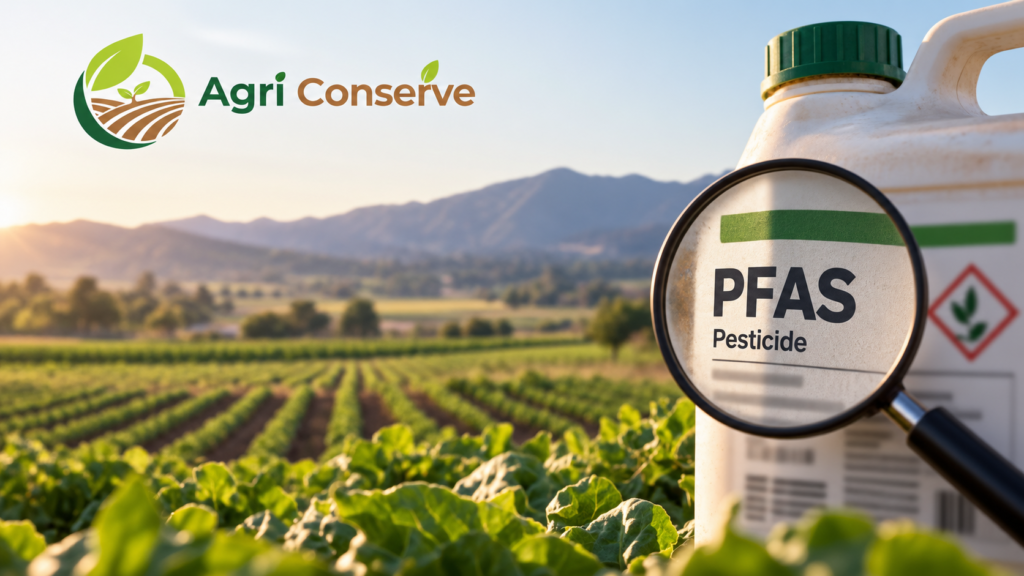
California has signed a new law requiring the state to identify and publicly track agricultural pesticides containing PFAS, commonly known as “forever chemicals.” The law was signed this week by Governor Gavin Newsom and puts greater emphasis on transparency around what chemicals are being used across the state’s farms.
For agriculture, this is an important development because California is one of the world’s major food-producing regions.
What is changing?
The new law, Assembly Bill 1603, directs California’s Department of Pesticide Regulation to identify registered pesticides containing PFAS and publish information about their agricultural use.
The department will also have to track statewide trends in PFAS pesticide use and make that information publicly available. The new reporting requirements are scheduled to begin by January 1, 2028.
This does not mean California has banned PFAS-containing pesticides.
That distinction is important.
The new system is primarily about identification, reporting and transparency. Regulators will first have better information about which products contain PFAS, where they are being used and how their use changes over time.
Why does tracking matter?
You cannot manage what you cannot properly measure.
California already collects extensive pesticide-use information. The new legislation adds another layer by specifically identifying PFAS-related pesticide use.
That could eventually allow regulators and researchers to examine questions such as:
- Which crops receive these products?
- Where are they being applied?
- How frequently are they used?
- Is their use increasing or declining?
- Are there areas where additional environmental monitoring may be necessary?
The value of the legislation therefore goes beyond creating another database.
It creates a better evidence base for future agricultural policy.
PFAS is a complicated issue
The term PFAS covers a very large group of chemicals, and not every substance classified under a particular PFAS definition behaves identically.
California’s Department of Pesticide Regulation itself points out that PFAS definitions vary and that the persistence of individual chemicals can range from relatively short periods to much longer times. The department evaluates pesticides individually for human-health and environmental impacts rather than treating every PFAS compound as identical.
That makes the new tracking system particularly relevant.
Better data can help policymakers distinguish between different chemicals and exposure situations rather than relying only on broad labels.
This is part of a wider shift in pesticide regulation
California has already been increasing its use of monitoring and continuous evaluation.
Its pesticide regulator collects pesticide-use reports, environmental monitoring information, illness and injury reports and scientific research to identify potential risks from pesticides already in use.
The state has also introduced a new scientific committee that allows the public to recommend pesticide classes, products or active ingredients for additional scientific evaluation.
The PFAS legislation fits into this broader movement toward more transparent, data-driven pesticide oversight.
What could this mean for sustainable agriculture?
The most interesting part may come later.
Tracking alone does not make agriculture more sustainable. But reliable information can make better decisions possible.
If researchers eventually identify environmental or health concerns associated with particular chemicals, regulators will have a clearer picture of where those products are being used. That could support future decisions involving restrictions, alternatives, monitoring or changes in farming practices.
For farmers, however, the transition will also need to consider the practical reality of crop protection.
California’s own research into alternatives to certain fumigant pesticides recently found that there is currently no single one-to-one replacement for some products, with effectiveness and cost remaining important barriers.
That is an important reminder.
Moving toward safer agricultural systems cannot simply mean removing a product without giving farmers workable alternatives.
A bigger question for agriculture
California’s decision could also influence how other agricultural regions think about chemical transparency.
As consumers, regulators and food companies demand greater visibility into agricultural supply chains, knowing what was applied, where it was applied and how frequently it was used could become increasingly important.
That fits closely with the broader direction of sustainable agriculture: not just producing food, but creating systems where environmental impacts can actually be measured and managed.
California has not banned PFAS pesticides with this law.
It has done something more fundamental first:
It is making their agricultural use easier to see.
And sometimes, better visibility is the first step toward better agricultural decisions.