
What if the next climate-smart crop innovation was hidden below the soil rather than above it?
Scientists at the Salk Institute are field-testing genetically engineered soybeans with deeper, larger root systems designed to help plants reach water during drought while storing more carbon underground. The research has now moved beyond laboratory work into agricultural fields across the U.S. Midwest.
The idea starts with the roots
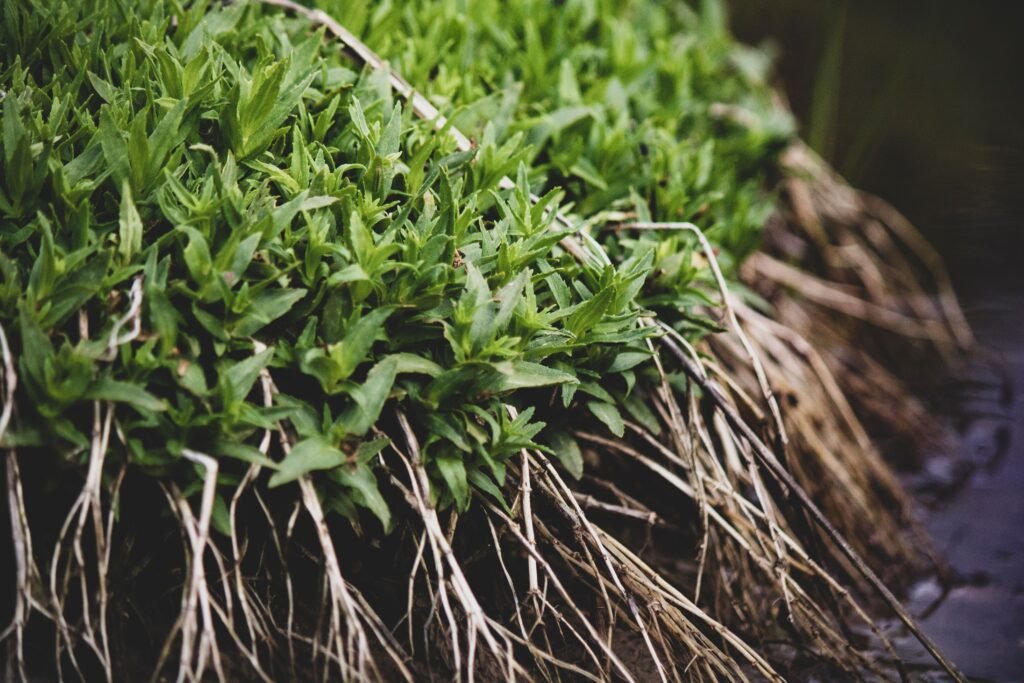
Conventional soybean plants tend to spread their roots relatively close to the soil surface.
The researchers are developing plants whose roots grow more vertically and deeper into the ground. The hope is that these roots can reach moisture that remains available during dry periods while leaving more carbon-rich material deeper in the soil.
Over six years of research, the team identified 347 genes associated with root growth and carbon storage and used that information to develop soybean lines with altered root characteristics.
It is an unusual approach to climate resilience because the same biological change could potentially address two problems at once: helping the crop cope with water stress and increasing the amount of carbon stored below ground.
The field is where the real test begins
Laboratory results are not enough.
Researchers are now testing the soybeans in Illinois, Missouri, Kansas and Iowa. At one field site in Illinois, scientists can control rainfall conditions and use underground monitoring equipment to track root development and changes in soil carbon.
The researchers still need to establish how much additional carbon remains stored over the long term and whether the modified plants can maintain competitive yields under real agricultural conditions.
That is an important distinction.
The technology is not yet a proven carbon-removal solution for farmers. It is a field research programme designed to find out whether the concept works at agricultural scale.
An $18 million test of the idea
The field research is being supported by an $18 million grant from the Bezos Earth Fund.
The funding will help researchers examine drought resilience, carbon storage, crop performance and what would be required to eventually bring the technology into commercial agriculture.
Earlier modelling has suggested that deeper-rooted crops could have significant carbon-removal potential if they were eventually adopted at large scale. But those projections depend on the plants actually performing well in farmers’ fields and keeping carbon stored for meaningful periods.
Farmers will ultimately decide whether it matters
A climate benefit alone will not be enough.
Farmers need crops that perform reliably, fit existing farming systems and make economic sense. Seed companies, buyers, regulations and access to finance will also influence whether a new crop technology can move from research plots to millions of hectares.
That may be the biggest challenge facing the project.
A deeper-rooted soybean that stores more carbon sounds promising. But its real success will be measured by whether farmers eventually have a reason to plant it.
Agriculture could start looking at the soil differently
For decades, crop improvement has focused heavily on what happens above ground: yield, disease resistance, plant height and harvest characteristics.
This research points toward another possibility.
The root system itself could become a major target for agricultural innovation.
If scientists can develop crops that use deeper soil moisture, withstand drought and store more carbon without sacrificing productivity, the underground part of the plant could become just as important to climate-smart farming as the crop we see above the surface.
The research is still underway, but the question it raises is fascinating:
Could the next generation of climate-resilient crops help farmers survive a drier future while quietly storing more carbon beneath their feet?