
For generations, farming has followed the rhythm of daylight. This summer, that rhythm is changing.
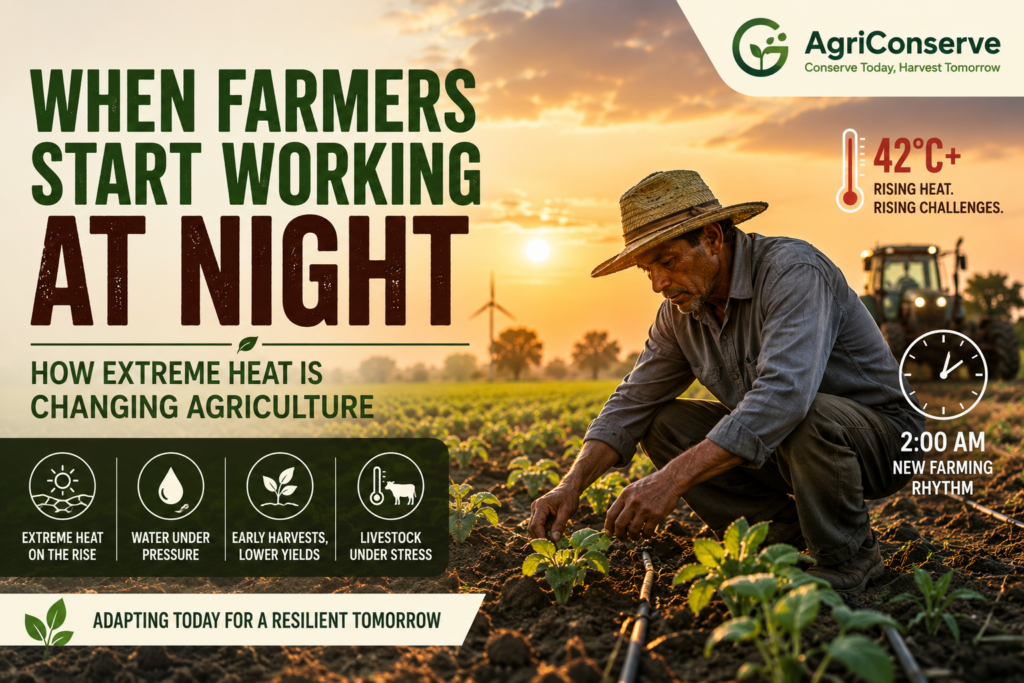
Across parts of Europe, farmers are starting work in the middle of the night to escape dangerous daytime temperatures. In some areas, crops are being harvested hours earlier than usual, while livestock farmers are changing feeding and cooling routines to protect animals from heat stress.
The change is not limited to Europe. In East Asia, an intense heatwave has damaged crops across South Korea, Japan and parts of China. South Korea recorded temperatures as high as 42.5°C, with some potato and watermelon crops suffering severe heat damage.
The Farming Calendar Is Moving
Extreme heat does more than reduce yields. It can change when farmers can safely work and when crops are ready to harvest.
In Britain, some farms have already completed harvest unusually early. One farmer reported yields around 20% below long-term averages, while dry conditions have also made it difficult to establish the next season’s crops.
For farmers, this creates a difficult cycle. A crop may mature faster because of heat, but the resulting harvest may be smaller or poorer in quality. At the same time, dry soil can make preparing the next crop more difficult.
Water Is Becoming the Bigger Question
Irrigation can protect crops, but it is not an unlimited solution.
Across drought-hit parts of Europe, water reserves are under increasing pressure. Farmers are therefore looking at ways to get more production from every unit of water—from improved irrigation and soil management to changing planting decisions and diversifying crops.
This is where climate-smart agriculture becomes more than a sustainability concept. For many farmers, it is becoming a practical requirement.
What Comes Next?
Agriculture has always adapted to changing conditions, but today’s challenge is the speed of change.
Better heat-tolerant varieties, improved weather forecasting, efficient irrigation, healthier soils and changes in farm schedules can all help. Technology can provide better information, but farmers still need access to water, finance, research and practical agricultural advice to act on it.
The sight of farmers harvesting at 2 a.m. may seem unusual today. But it also tells us something important about the future of farming: as temperatures rise, adapting to the climate may require changing not only what we grow, but how and when we farm.