
A decade-long study from France is reshaping how we think about modern agriculture. The research suggests that farming without pesticides is not only possible but can also deliver stable yields and strong financial returns.
Led by INRAE, the study challenges the long-standing belief that chemical inputs are essential for productive farming.
What the Study Explored
Between 2015 and 2025, researchers examined nine different cropping systems across various regions of France. These systems included both arable and mixed farming operations.
What makes this study unique is its strict approach. Farmers completely avoided pesticides, including those allowed in organic farming. However, they were still permitted to use mineral fertilizers where necessary.
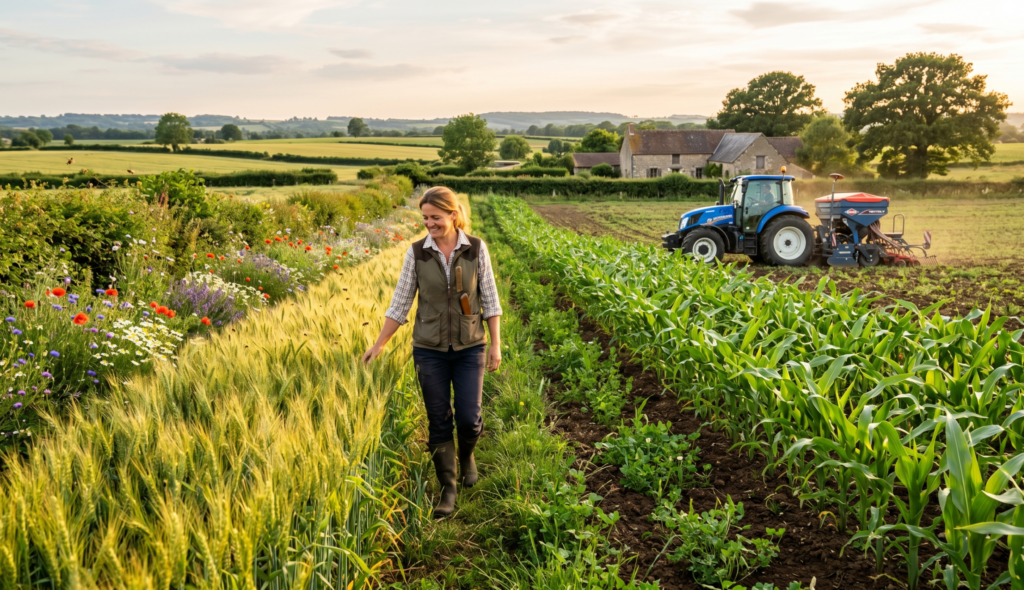
The focus was on prevention rather than treatment. Instead of relying on chemicals, farmers adopted agroecological practices such as:
- Long and diverse crop rotations
- Increased crop diversity
- Use of cover crops
- Soil health improvement techniques
These systems were designed in collaboration with farmers to reflect real-world conditions rather than controlled experimental setups.
Yield Performance: Slightly Lower but Competitive
In many cases, pesticide-free systems produced slightly lower yields compared to conventional farms. For crops like wheat and maize, the difference was noticeable but not dramatic.
For example:
- Conventional wheat yields: around 500–700 g/m²
- Pesticide-free wheat yields: around 400–600 g/m²
Some trials even reached levels close to conventional farming.
Interestingly, these results were still significantly better than typical organic systems in the same regions, which averaged around 250–300 g/m² for wheat.
The takeaway is clear. While pesticide-free farming may not always achieve the highest yields, it performs well enough to remain a viable option.
Strong Economic Results for Farmers
The financial findings of the study are particularly noteworthy.
At four key sites, pesticide-free systems delivered solid profit margins. The income data showed:
- 45% of cases earned two to three times the minimum wage
- 35% exceeded three times the minimum wage
- 20% matched or slightly exceeded the minimum wage
This means that in 80% of cases, farmers earned well above baseline income levels.
The study also found that pest and disease damage did not increase over time. This directly challenges the assumption that removing pesticides leads to uncontrollable crop losses.
Practices That Made It Work
The success of these systems was not accidental. It depended on a combination of well-planned strategies.
1. Crop Rotation and Diversity
Long rotations helped break pest cycles naturally. Including different crops reduced the risk of disease buildup.
2. Agroecological Pest Management
Farmers relied on techniques like intercropping, improved seed selection, and supporting beneficial insects.
3. Soil Health Management
Cover crops, balanced nutrient use, and careful soil management played a key role in maintaining productivity.
These practices required more planning and knowledge, but they reduced dependence on external inputs.
Why This Study Matters
Organizations such as PAN Europe and Friends of the Earth Europe are already using these findings to support policy changes.
The research points to a practical middle path in agriculture. It sits between conventional chemical-heavy farming and fully organic systems.
For policymakers, this opens the door to new strategies that support sustainable farming without sacrificing productivity.
For farmers, it highlights the value of investing in knowledge-based practices instead of relying heavily on chemical solutions.
A Shift Toward Smarter Farming
This study shows that reducing or eliminating pesticides does not automatically mean lower income or poor yields.
Instead, it highlights a shift toward smarter, more resilient farming systems. With the right practices in place, farmers can protect their crops, maintain productivity, and improve profitability.
As global agriculture faces increasing pressure to become more sustainable, pesticide-free farming is no longer just an idea. It is a proven and practical approach.
