Agriculture is changing rapidly. Climate uncertainty, rising production costs, and growing consumer awareness are pushing farmers to rethink traditional practices. People today want food that is transparent, environmentally responsible, and grown with care.
In response, many farmers are shifting their focus from simply increasing production to improving quality, efficiency, and sustainability. Innovations in soil health, smart farming technology, and plant based food systems are shaping the future of agriculture.
From small urban gardens to large scale farms, these emerging trends are helping growers build resilient and productive systems that are better for both the environment and the economy.
Compact Urban and Vertical Farming
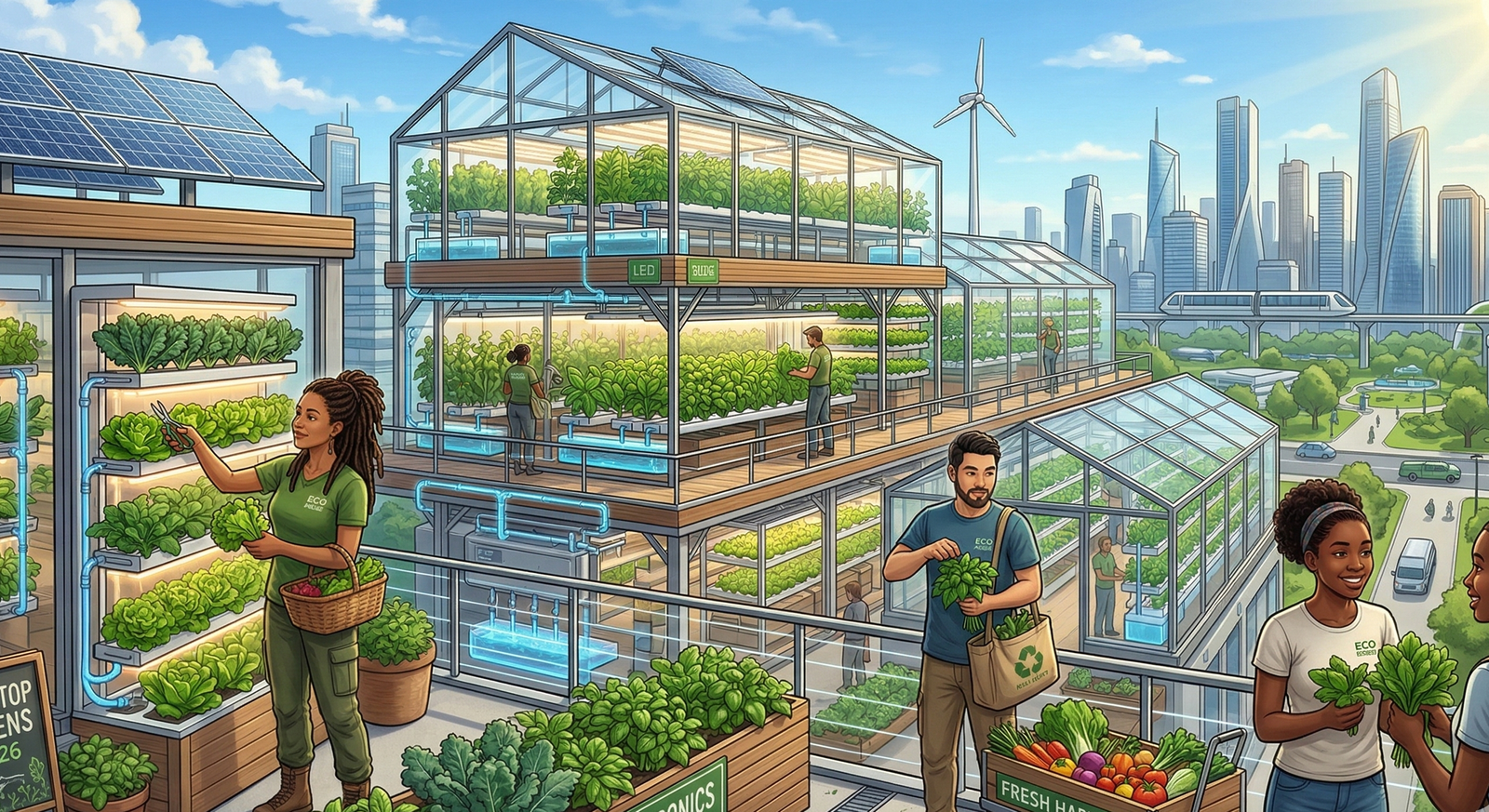
Urban and vertical farming are gaining popularity as cities search for smarter ways to produce food locally. These systems use stacked growing setups, containers, or indoor environments to maximize limited space.
One of the biggest advantages of vertical farming is efficient resource use. Controlled irrigation systems reduce water waste while nutrient recycling ensures plants receive exactly what they need. This method also allows growers to sell produce locally with full traceability, which is increasingly valued by consumers.
If you want to start a small urban farming setup, begin with well draining containers and lightweight growing mixes. Fast growing crops such as leafy greens, herbs, and small fruits work especially well in compact spaces.
Adding a simple drip irrigation system and timer can make maintenance easier. For indoor setups, LED grow lights can help maintain consistent growth throughout the year.
Rise of Edible Home Gardens
Home gardening is experiencing a major revival. As more people adopt plant based diets, there is growing interest in fresh vegetables, herbs, and fruits grown at home. Families, schools, and community groups are increasingly building small gardens to produce chemical free food.
Home gardens also support biodiversity and encourage healthier eating habits. Freshly harvested produce often contains more nutrients and flavor than store bought alternatives.
To create a productive home garden, use deep containers or raised beds filled with rich soil. Organic fertilizers and natural compost can improve soil health while enhancing the taste of crops.
Crop rotation is another helpful strategy. Rotating plant families prevents soil depletion and reduces pests. Adding flowering plants can attract pollinators, which improves yields and adds beauty to the garden.
Regenerative Farming and Living Soils
Regenerative agriculture focuses on restoring soil health rather than simply using it for crop production. Healthy soil is full of beneficial microbes, fungi, and earthworms that help cycle nutrients naturally.
These living soil systems maintain long term fertility while reducing the need for synthetic chemicals. Over time, regenerative practices can improve crop resilience and support healthier ecosystems.
Farmers can start by adding compost, organic matter, and cover crops to their soil. These materials increase microbial activity and improve soil structure.
Reducing excessive tilling also protects soil organisms and prevents erosion. Many growers are now turning to bio based fertilizers and natural amendments that nourish both plants and the soil.
Automation and Artificial Intelligence in Farming
Technology is playing an increasingly important role in modern agriculture. Sensors, drones, and automated systems allow farmers to monitor fields with remarkable precision.
Real time data on soil moisture, temperature, nutrient levels, and pest activity helps farmers make better decisions. This reduces waste, saves resources, and increases productivity.
Simple tools like pH sensors and humidity monitors can connect to mobile apps and provide instant updates. Automated irrigation systems can adjust watering schedules based on weather and soil conditions.
Artificial intelligence is also being used to predict crop diseases, optimize planting schedules, and improve harvest planning. When combined with farmer experience, these tools can greatly improve efficiency.
Bio Fertilizers and Circular Resource Systems
Bio fertilizers are becoming a key component of sustainable farming. These natural inputs support plant growth while strengthening soil biology. Instead of relying heavily on chemical fertilizers, farmers can use beneficial microbes and organic nutrients.
Another important trend is the development of circular farming systems. In these systems, waste materials such as crop residues and organic scraps are recycled back into the soil or composted for future use.
This closed loop approach reduces waste, lowers input costs, and supports global sustainability goals. Monitoring factors like electrical conductivity levels can also help farmers apply nutrients more accurately.
Building Future Ready Farming Systems
By 2026, successful farming will rely on a balance between technology, ecological practices, and efficient resource use. Urban farming systems, regenerative soils, and smart agriculture tools are all part of this transformation.
Farmers who adopt these strategies early will be better prepared for changing market demands and environmental challenges. Sustainable farming is no longer just an option. It is becoming a practical pathway toward long term productivity and environmental responsibility.
The future of agriculture lies in combining innovation with nature friendly practices to produce healthy food while protecting the planet.
Leave a Reply