The agriculture industry is entering a new era. In 2026, the Internet of Things is no longer just a concept discussed in tech forums. It is actively reshaping how farms operate across the world.
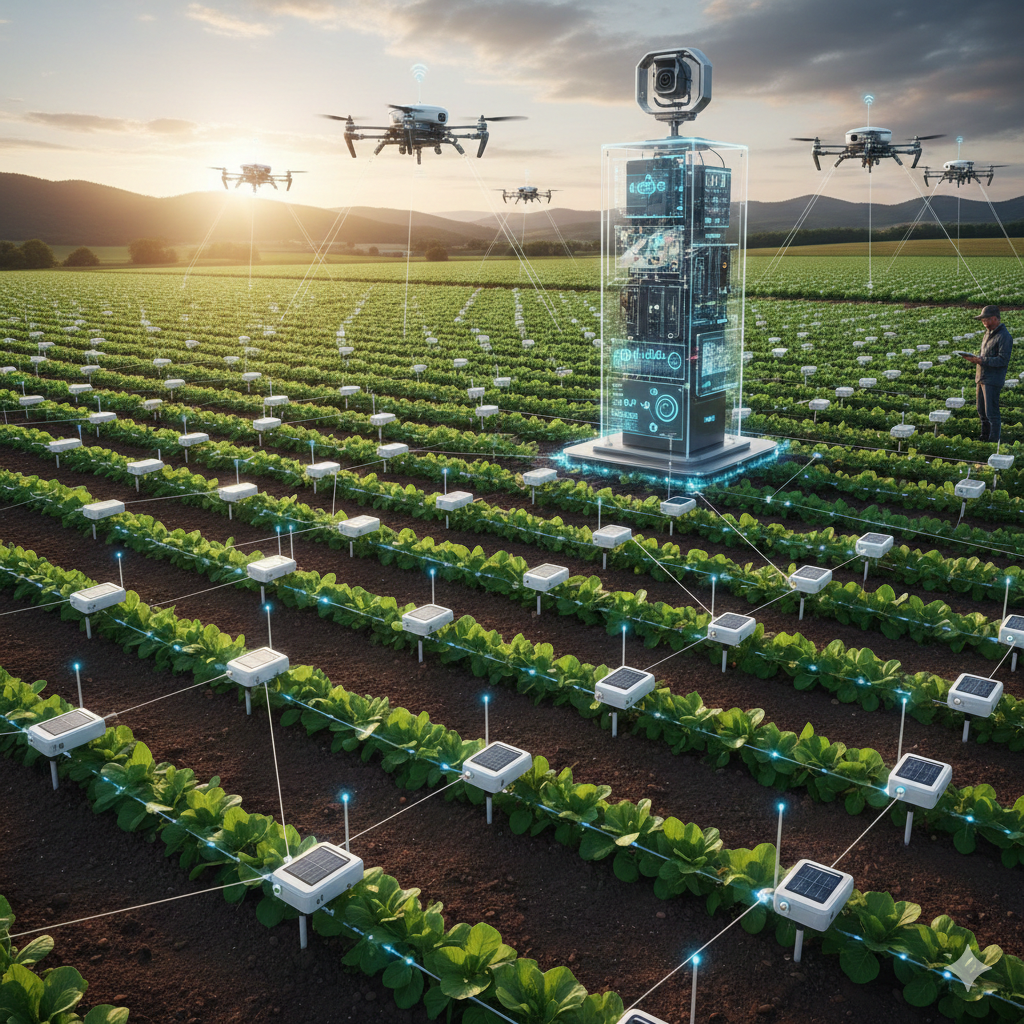
With global food demand increasing and climate challenges becoming more complex, farmers are turning to smart technologies to improve productivity while reducing waste. IoT in agriculture is helping them grow more with fewer resources. This shift toward data driven farming is creating a more efficient and sustainable agricultural system.
What Is IoT in Agriculture?
IoT in agriculture refers to the use of connected devices, sensors, and software platforms that collect and analyze real time data from farms. These systems help farmers make informed decisions about irrigation, fertilization, pest control, and harvesting.
Instead of relying only on experience or guesswork, farmers can now monitor their fields through accurate digital insights. As a result, farming becomes more precise, cost effective, and environmentally responsible.
Core Components of Smart Farming Systems
Smart farming depends on several interconnected technologies working together.
1. Field Sensors
Sensors are placed across farmland to measure soil moisture, temperature, pH levels, and nutrient content. These devices provide continuous updates, allowing farmers to respond immediately to changing field conditions.
2. Automated Machinery
Self driving tractors and agricultural drones are becoming increasingly common. These machines handle planting, fertilizing, spraying, and harvesting with high precision. Automation reduces manual errors and improves consistency across large fields.
3. Cloud Based Data Platforms
All collected data is processed through cloud platforms. Farmers can access reports, forecasts, and recommendations from anywhere. This improves decision making and long term planning.
4. Reliable Connectivity Networks
Satellite connections and cellular networks ensure uninterrupted data transmission. Even remote farms can stay connected, making IoT solutions practical in rural regions.
Key Benefits of IoT in Agriculture
The advantages of IoT adoption are measurable and significant.
Reduced Water Usage
Smart irrigation systems guided by real time sensor data can reduce water consumption by up to 30 percent. Water is delivered only when and where it is needed.
Lower Pesticide Use
Precision spraying methods help cut pesticide usage by nearly 60 percent. This not only saves money but also protects soil health and surrounding ecosystems.
Higher Crop Yields
Farmers report yield improvements between 15 and 30 percent. With better monitoring and timely intervention, crops receive optimal growing conditions.
Decreased Labor Costs
Automation lowers labor expenses by around 25 percent. Tasks that once required multiple workers can now be handled by intelligent machines.
Overall, IoT is improving profitability while supporting sustainable farming practices.
Major Agriculture Technology Trends in 2026
Several technologies are driving rapid adoption this year.
Autonomous Equipment
Around 67 percent of farms are integrating autonomous machinery. GPS and artificial intelligence allow tractors and harvesters to operate with minimal human input. This reduces labor costs and increases operational efficiency.
Smart Irrigation Systems
With a 77 percent adoption growth rate, smart irrigation is leading the transformation. Farmers benefit from consistent crop hydration while conserving water resources.
Satellite Monitoring
Satellite based farm monitoring now covers approximately 65 percent of agricultural operations in remote areas. It helps farmers track crop health, weather patterns, and land conditions from a distance.
Blockchain for Traceability
About 58 percent of agricultural supply chains are incorporating blockchain technology. This improves transparency, ensures product traceability, and strengthens supply chain reliability.
The Future of IoT in Indian Agriculture and Beyond
Looking ahead, IoT driven precision agriculture is expected to expand further. Countries like India are rapidly adopting smart farming solutions to improve food security and strengthen rural economies.
Partnerships between agricultural enterprises and technology companies are enhancing digital platforms. Farmers can now access real time analytics through smartphones and remote dashboards.
As climate uncertainties grow, IoT offers a practical path toward resilient and sustainable food systems. By minimizing inputs and maximizing outputs, smart farming supports both economic growth and environmental protection.
Conclusion
IoT in agriculture is not just a technological upgrade. It represents a strategic shift toward smarter, data driven farming. In 2026, farmers who adopt connected technologies are seeing real improvements in efficiency, cost savings, and productivity.
As adoption continues to rise globally, IoT will play a central role in building a sustainable agricultural future.
Leave a Reply