
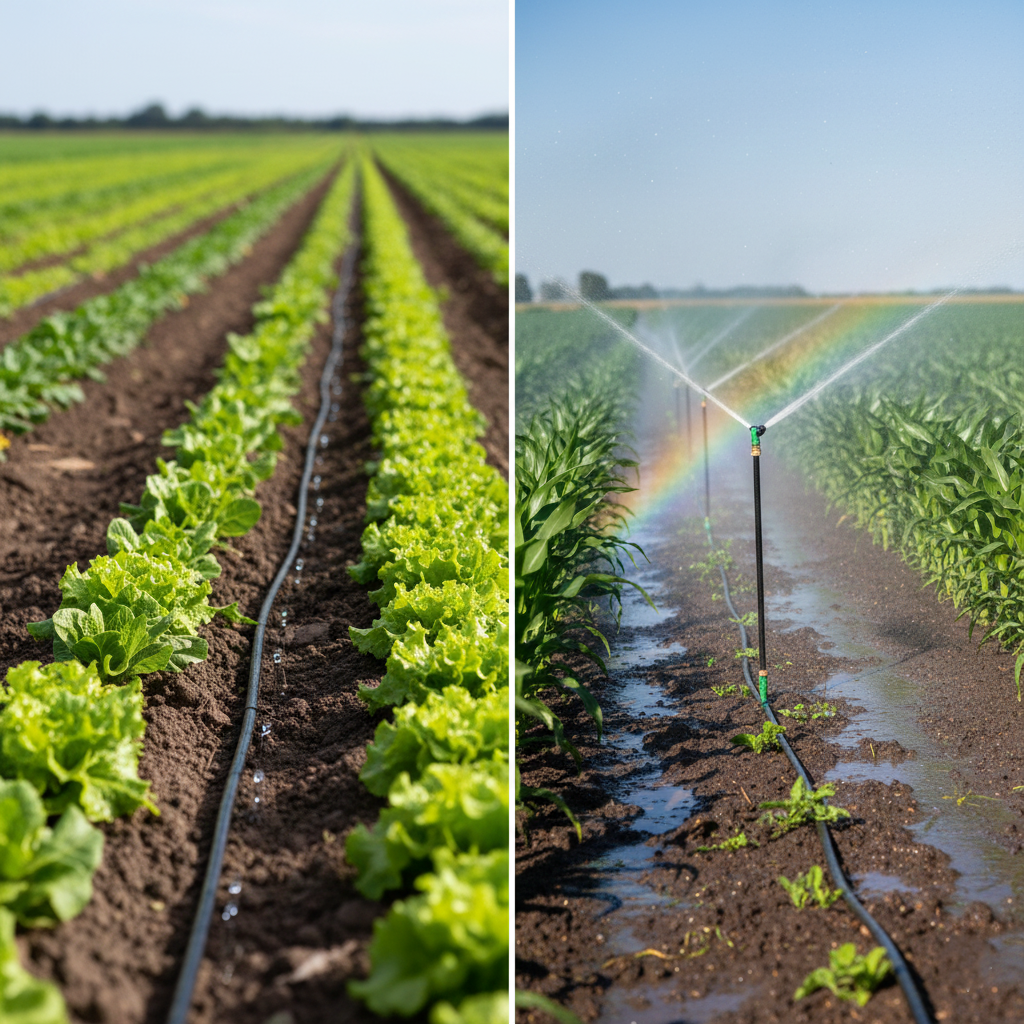
Water management is one of the biggest challenges in modern farming. With growing pressure to save water and improve crop yields, choosing the right irrigation method can make all the difference. Two of the most popular systems today are drip irrigation and sprinkler irrigation — but which one is right for your farm? Let’s break it down.
Understanding Drip Irrigation
Drip irrigation is a precision watering system that delivers water directly to the plant’s root zone through a network of tubes and emitters. It’s known for its high efficiency and minimal water loss.
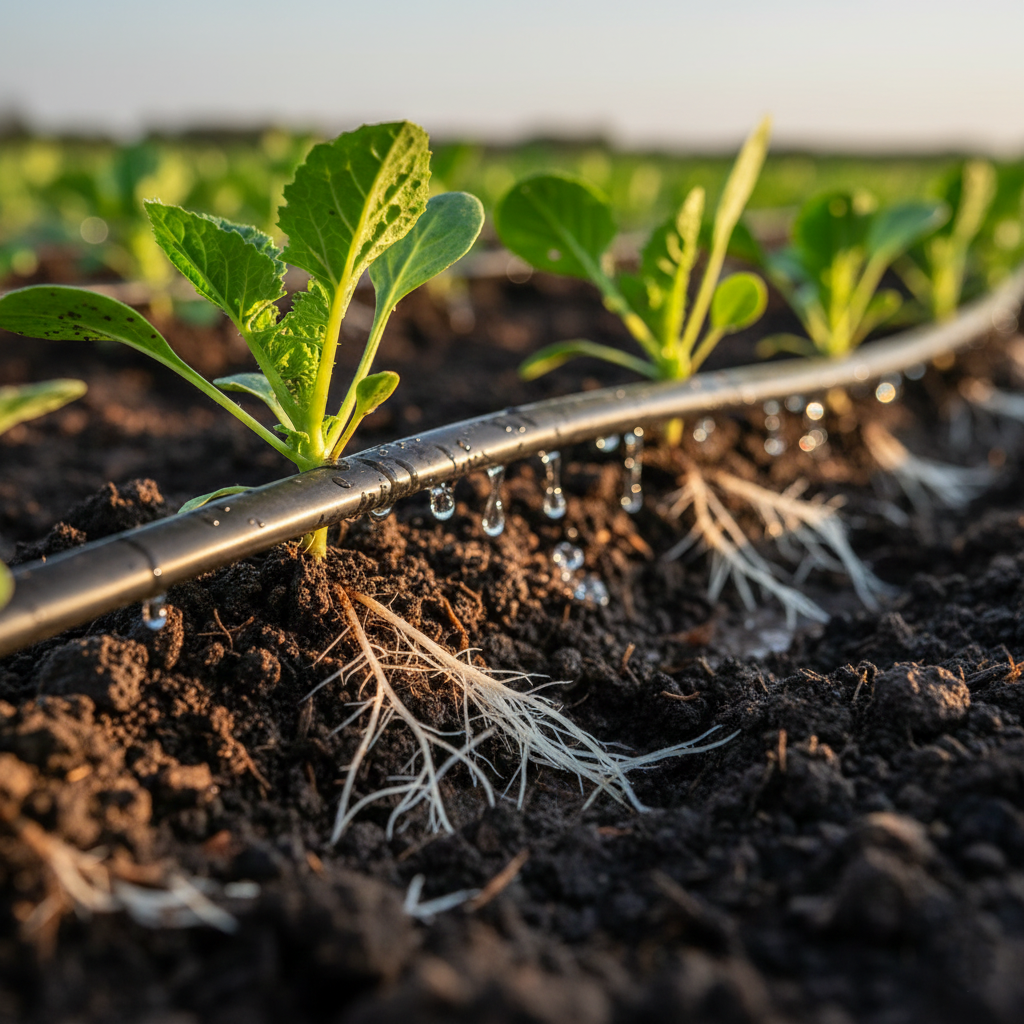
Benefits of Drip Irrigation:
- Saves up to 50–70% of water compared to traditional methods.
- Reduces weed growth since water targets only the crop area.
- Minimizes soil erosion and nutrient runoff.
- Works best for fruit, vegetable, and greenhouse crops.
Limitations:
- Initial setup can be expensive.
- Tubes and emitters require regular cleaning and maintenance.
Understanding Sprinkler Irrigation
Sprinkler irrigation mimics natural rainfall by spraying water into the air through pipes and nozzles. It provides even water distribution and is suitable for large or uneven fields.
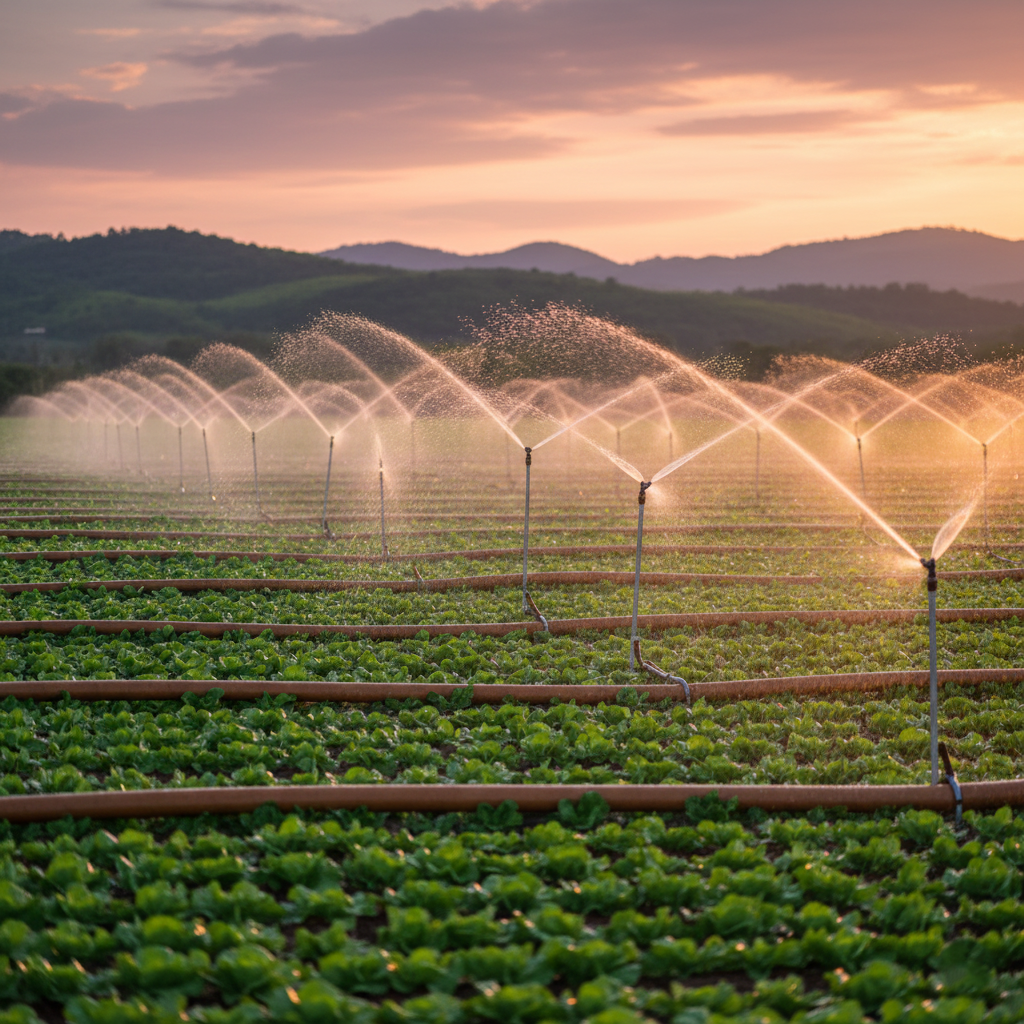
Benefits of Sprinkler Irrigation:
- Covers large areas quickly and evenly.
- Helps maintain soil moisture for shallow-rooted crops.
- Reduces labor compared to manual watering.
- Can be automated with weather-based systems for efficiency.
Limitations:
- Can lose water to evaporation and wind drift.
- Less effective in windy or high-temperature areas.
Drip vs. Sprinkler Irrigation – Key Differences
| Feature | Drip Irrigation | Sprinkler Irrigation |
|---|---|---|
| Water Efficiency | Very High (Minimal Waste) | Moderate |
| Suitable Crops | Vegetables, Fruits, Orchards | Grains, Lawns, Large Fields |
| Initial Cost | Higher | Moderate |
| Maintenance | Frequent Cleaning | Occasional Servicing |
| Best For | Water-scarce regions | Uniform flat lands |
Choosing the Right System for Your Farm
The best choice depends on your crop type, soil condition, and climate.
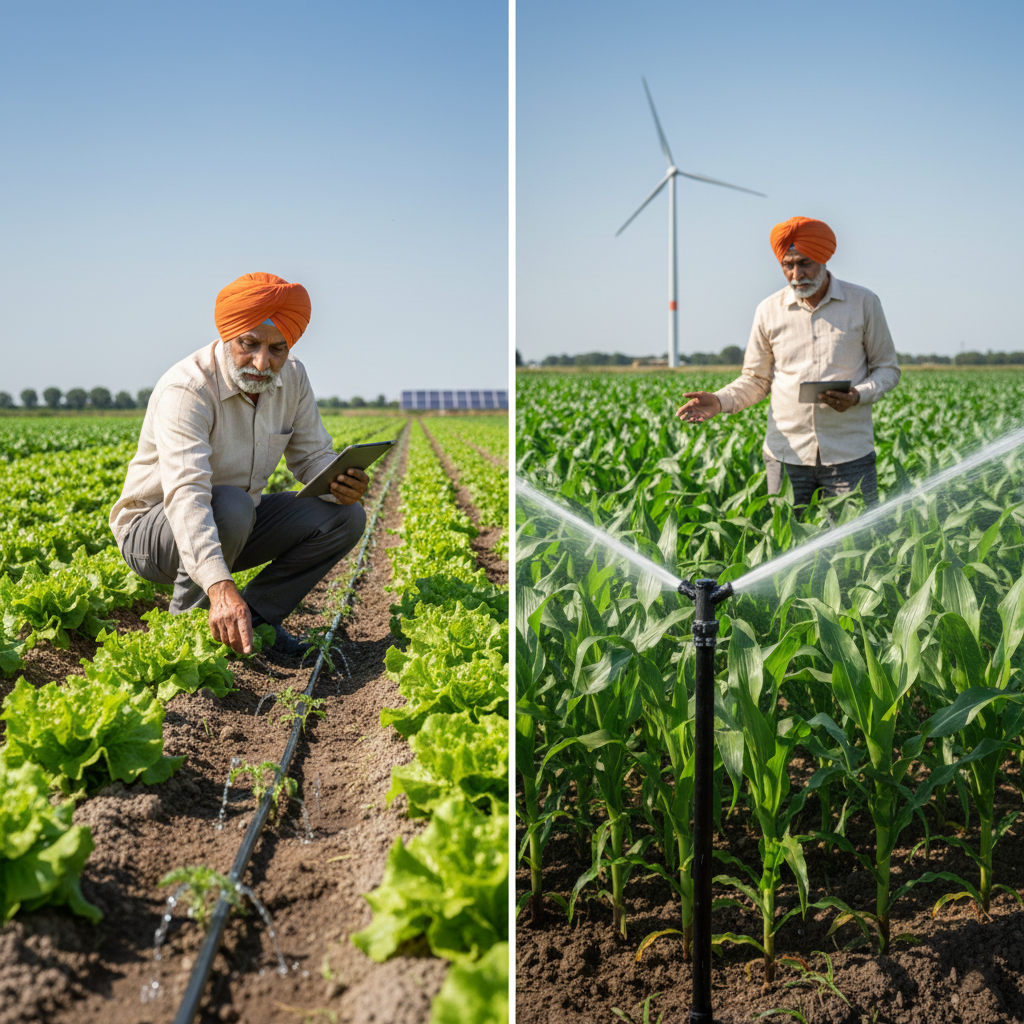
- If you grow high-value crops in water-scarce areas, drip irrigation is ideal.
- If your farm covers large fields with diverse crops, sprinkler irrigation may suit better.
Sometimes, a combination of both systems works best using drip for specific crops and sprinklers for general irrigation.
Building a Sustainable Future
Both methods contribute to sustainable agriculture by saving water and improving efficiency. The key is to choose the one that aligns with your farm’s needs and long-term sustainability goals.
For more water-saving and sustainable farming tips, explore these related posts:

Pingback: How to Reduce Water Waste in Agriculture: 7 Easy Ways - Agri Conserve