
Regenerative farming is gaining global attention as a practical way to restore soil health, improve biodiversity, and capture carbon naturally. At the same time, blockchain technology is emerging as a powerful tool to support these efforts. By enabling transparent and secure tracking of farming practices, blockchain is helping build trust between farmers, buyers, and investors while strengthening the credibility of sustainability claims.
Why Blockchain Fits Regenerative Agriculture
Regenerative agriculture focuses on working with nature rather than against it. Practices such as cover cropping, reduced tillage, and crop rotation play a key role in improving soil structure and increasing carbon storage. However, proving that these practices are actually being followed has always been a challenge.
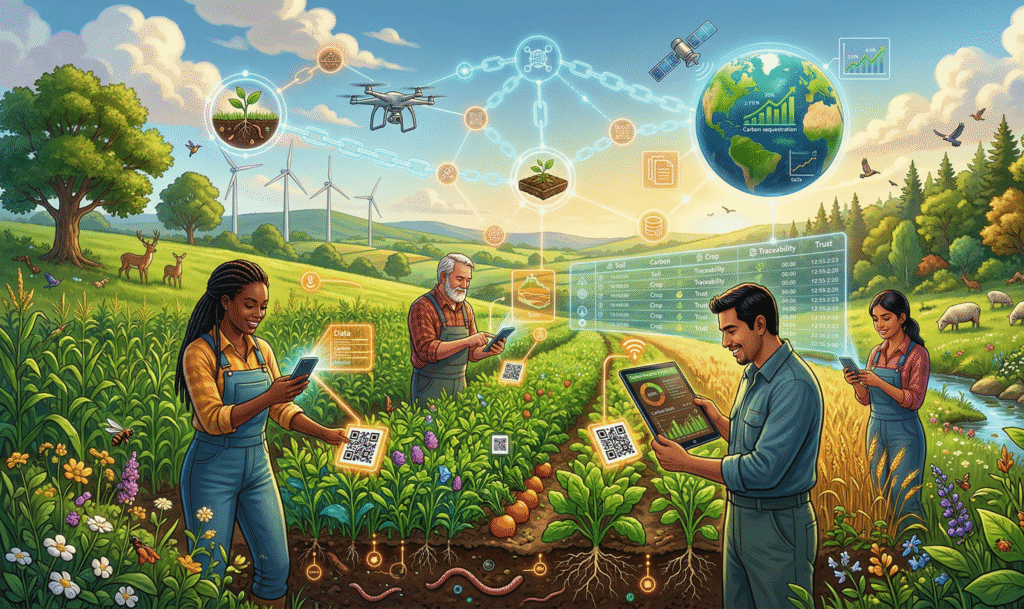
Blockchain solves this problem by acting as a secure digital ledger. Every farming activity can be recorded and stored in a way that cannot be altered or tampered with. This creates a transparent system where all stakeholders can verify how the land is being managed. As a result, farmers can confidently demonstrate their commitment to sustainable practices.
Key Advantages for Farmers
One of the biggest benefits of blockchain in regenerative farming is the ability to create reliable and permanent records. These records allow farmers to differentiate their products in the market and potentially earn premium prices for sustainably grown produce.
Blockchain also plays an important role in carbon credit verification. By accurately tracking soil carbon levels and farming practices, farmers can participate in carbon markets and generate additional income. This opens up new revenue streams, especially through partnerships with organizations focused on carbon removal.
In addition, blockchain helps simplify supply chains. By connecting farm-level data directly to consumers, it increases transparency and allows buyers to make informed choices about the products they purchase.
Real-World Applications
Several companies are already using blockchain to support regenerative agriculture. Advanced systems combine satellite imagery and on-ground sensors to monitor soil carbon levels and farming activities. This data is then recorded on blockchain platforms, ensuring accuracy and trust.
These platforms also connect farmers with buyers and investors who prioritize sustainability. By creating a direct link between producers and markets, blockchain encourages the adoption of regenerative practices. It also supports investment in modern tools such as precision farming technologies, making it easier for farmers to improve efficiency while maintaining environmental standards.
Future Potential of Blockchain in Farming
As consumer demand for traceable and sustainable food continues to grow, the role of blockchain in agriculture is expected to expand. Future systems will likely integrate blockchain with artificial intelligence and Internet of Things technologies to provide real-time insights into farm operations.
This combination can help farmers make better decisions, improve productivity, and enhance environmental outcomes. On a larger scale, it supports global efforts toward climate resilience and food security.
Farmers who adopt blockchain early are more likely to benefit from these advancements. They position themselves not only for long-term profitability but also as leaders in sustainable agriculture.
Conclusion
Blockchain is more than just a technological trend. It is becoming a practical solution for improving transparency and accountability in regenerative farming. By enabling secure data tracking and verification, it empowers farmers, builds consumer trust, and supports sustainable growth in agriculture.
As the industry evolves, the integration of blockchain with other advanced technologies will further strengthen its impact, making it a key driver in the future of farming.
