
Agriculture is entering a new phase where technology is not just improving productivity but also strengthening sustainability. In 2026, AgTech innovations are helping farmers make smarter decisions, reduce waste, and adapt to changing environmental conditions. These advancements are especially valuable for regions facing climate uncertainty, where efficient resource use is critical for long-term success.
This article explores the most impactful trends shaping modern farming and how they contribute to a more sustainable future.
Precision Agriculture Is Driving Smarter Farming
Precision agriculture has become a cornerstone of modern farming practices. Today’s farmers are using advanced tools powered by artificial intelligence to monitor and manage their fields with remarkable accuracy.
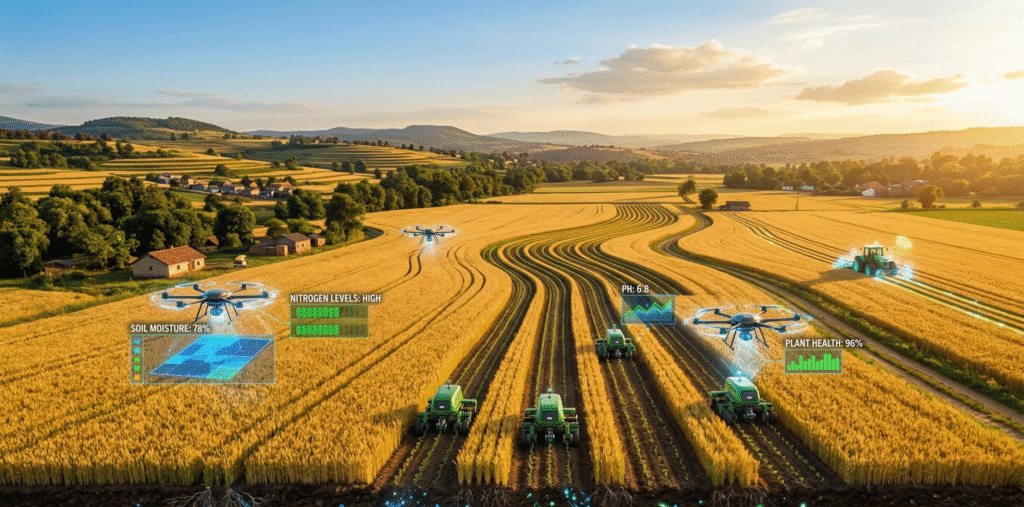
Technologies such as satellite imaging and soil sensors provide real-time insights into moisture levels, nutrient availability, and crop health. This allows farmers to apply water, fertilizers, and other inputs only where needed. As a result, resource waste is significantly reduced while crop yields improve.
Drones are also playing an important role. Equipped with advanced imaging systems, they can detect early signs of crop stress that may not be visible to the human eye. Early detection helps farmers take timely action, preventing losses and improving efficiency.
Agricultural Robotics Solving Labor Challenges
Labor shortages continue to affect farming communities worldwide. To address this issue, many farms are turning to autonomous machines that can perform essential tasks with precision and consistency.
Modern agricultural robots are capable of planting seeds, removing weeds, and harvesting crops with minimal human intervention. These machines operate continuously, helping farmers maintain productivity even during peak seasons.
Another key advantage is adaptability. Powered by machine learning, these robots can adjust to changing field conditions, ensuring consistent performance. Many of these systems are battery-powered, which also supports the shift toward cleaner and more sustainable farming operations.
Climate-Resilient Crops for a Changing Environment
Unpredictable weather patterns have made crop resilience a top priority. Advances in gene-editing technologies are enabling the development of crop varieties that can withstand drought and other environmental stresses.
These improved crops require less water and fewer chemical inputs while maintaining stable yields. This makes them an ideal solution for farmers dealing with irregular rainfall and shifting climate patterns.
For regions such as Madhya Pradesh, where monsoon variability can impact agricultural output, adopting climate-resilient crops can provide greater stability and long-term benefits.
Data-Driven Nutrient Management Improves Efficiency
Fertilizer use is becoming more precise thanks to data-driven platforms that analyze multiple factors including soil health, weather patterns, and crop requirements.
Instead of relying on traditional methods, farmers now receive specific recommendations tailored to their fields. This scientific approach helps reduce excess fertilizer use, minimizing environmental impact while improving crop performance.
Many of these solutions are now available through mobile applications, making them accessible even to small-scale farmers. This shift is helping bridge the gap between advanced technology and everyday agricultural practices.
Biological Alternatives Are Replacing Chemicals
There is a growing movement toward replacing synthetic chemicals with natural alternatives. Biological products such as microbial solutions and bio-stimulants are gaining popularity for their ability to improve soil health and support plant growth.
These inputs enhance natural processes within the soil, helping crops develop stronger resistance to pests and diseases. As environmental regulations become stricter, the adoption of these eco-friendly solutions is expected to accelerate.
This trend aligns closely with the broader goal of sustainable agriculture, where maintaining soil quality and reducing chemical dependency are key priorities.
The Future of Sustainable Agriculture
AgTech innovations are reshaping the way farming is practiced, making it more efficient, resilient, and environmentally responsible. From precision tools and robotics to climate-smart crops and biological inputs, each advancement plays a role in building a sustainable agricultural system.
As these technologies become more accessible, farmers of all scales will have the opportunity to improve productivity while protecting natural resources. The future of agriculture lies in combining innovation with sustainability, ensuring food security for generations to come.
