

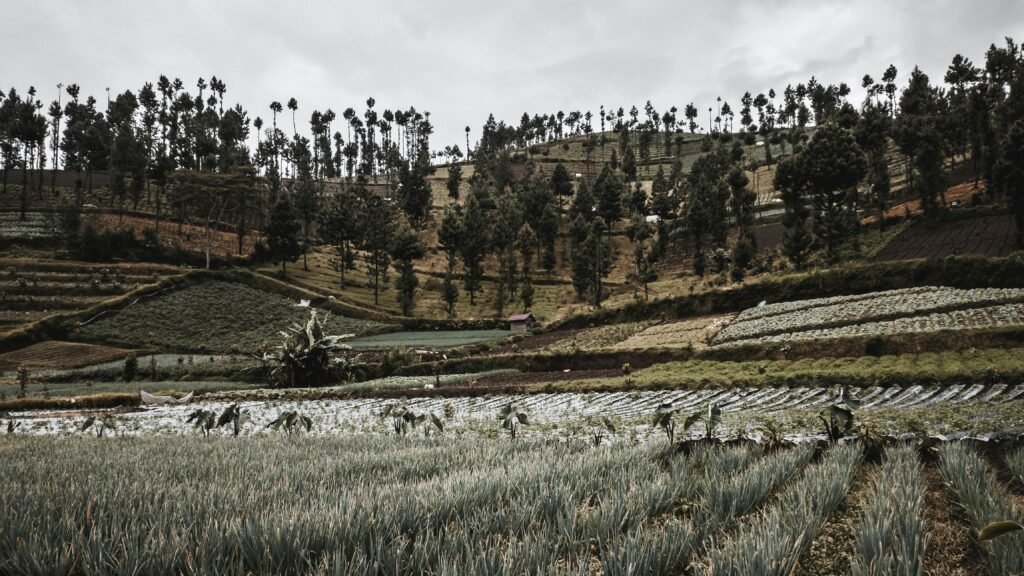
Agroforestry is gaining attention as a smart solution for farmers who want to combine crop production with tree cultivation. By improving soil health and increasing yields, it offers a practical alternative to conventional farming methods that often degrade the environment. Moreover, agroforestry restores ecosystems while providing reliable food production.
Understanding Agroforestry
Agroforestry integrates trees, crops, and livestock on the same land to maximize environmental and economic benefits. Farmers carefully select tree species and layouts to support natural processes such as nutrient cycling and pest control.
When implemented effectively, agroforestry strengthens the relationships between plants, animals, and soil. As a result, farms become more resilient to challenges like pests, drought, and soil erosion.
Key Agroforestry Systems
Farmers can choose from several agroforestry systems, each designed to suit different landscapes and goals:
- Alley Cropping: Crops grow between rows of trees. In this setup, trees reduce wind damage, prevent soil erosion, retain water, and enrich the soil with fallen leaves.
- Silvopasture: Trees provide shade for grazing animals. Additionally, they enhance carbon storage, support wildlife, and protect the soil from washing away.
- Forest Farming: Shade-tolerant crops grow under tree canopies. This method uses areas that would otherwise remain unsuitable for conventional farming.
Soil Health and Fertility Benefits
Trees improve soil stability by holding roots in place and increasing water absorption. Furthermore, planting diverse crops and trees encourages nutrient recycling. Leaf litter adds organic matter, naturally enriching the soil while reducing the need for chemical fertilizers.
Consequently, farms maintain long-term soil fertility and productivity.
Boosting Biodiversity
Agroforestry creates habitats for birds, insects, and pollinators. These species help control pests and support crop pollination. Therefore, farms become more resistant to environmental shocks, while also fostering a balanced ecosystem.
Climate Benefits and Carbon Storage
Trees absorb carbon dioxide and store it over long periods. By planting more trees, farms reduce greenhouse gas emissions and help mitigate climate change. Additionally, these systems provide natural cooling and reduce heat stress for crops and livestock.
Water Management Advantages
Tree canopies lower evaporation rates, capture rainwater more effectively, and act as natural barriers against floods. Consequently, farmers need less irrigation, and fields remain protected from water stress during extreme weather events.
Economic Advantages
Agroforestry generates multiple income streams through crops, timber, and livestock. This diversification reduces financial risk for farmers and strengthens local economies. Moreover, it encourages community employment and sustainable growth.
Conclusion
By combining ecological restoration with productive farming, agroforestry builds sustainable and resilient farms. In addition to boosting soil health, biodiversity, and climate resilience, it provides long-term economic stability. Therefore, it offers a future-ready solution for agriculture in the face of climate change and rising food demands.
