
Agriculture is entering a transformative phase as farmers deal with climate uncertainty, rising input costs, and ongoing labor shortages. In 2026, technology is not just supporting farming, it is redefining how decisions are made and how operations are managed.
From intelligent automation to data-driven planning, modern agri-tech solutions are helping farmers build stronger, more resilient systems. Let’s explore the top trends that are shaping the future of agriculture this year.
1. Smarter Decision-Making with Advanced AI
Artificial intelligence has moved far beyond simple forecasting tools. Today, it provides farmers with real-time, practical recommendations that can directly improve farm performance.
For example, AI systems can suggest when to irrigate crops based on sudden weather changes or soil conditions. This level of precision helps farmers increase productivity while reducing unnecessary resource use.
2. Rise of Self-Planning Farm Systems
A new generation of AI systems can now plan and execute tasks with minimal human input. These intelligent systems analyze multiple data sources such as weather patterns, soil health, and market demand.
As a result, farmers can optimize planting schedules, harvesting timelines, and input usage more efficiently. This reduces manual errors and allows operations to run more smoothly.
3. Automation Through Robots and Drones
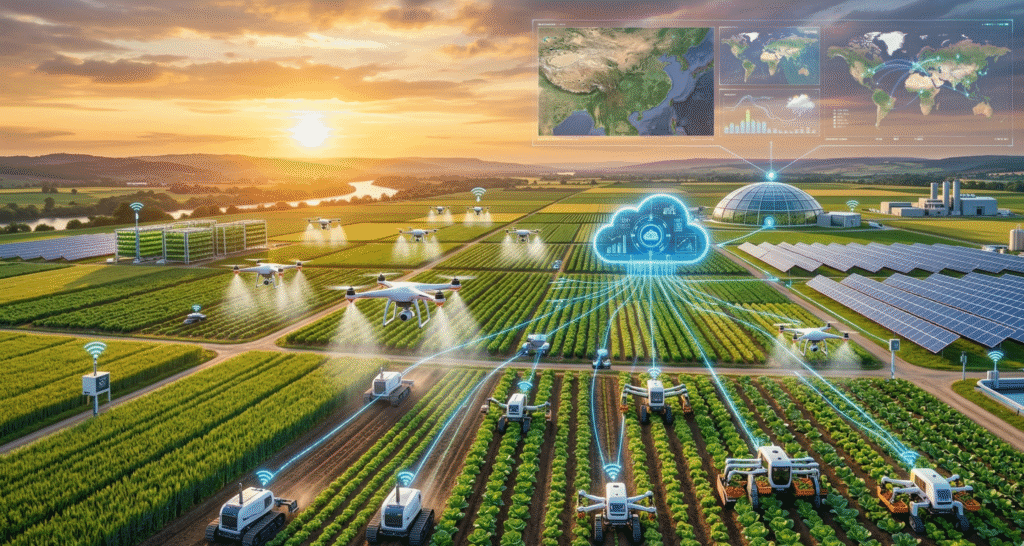
Automation is solving one of agriculture’s biggest challenges, labor shortages. Robots and drones are now widely used for planting, crop monitoring, and targeted spraying.
These machines can operate continuously and perform tasks with high accuracy. They ensure that inputs like fertilizers and pesticides are applied only where needed, improving both efficiency and sustainability.
4. Transparent and Compliance-Ready Tracking
With stricter environmental regulations, farmers and agribusinesses must prove their sustainability practices. Digital tools and blockchain-based systems are making this easier.
They create reliable records of carbon emissions, water usage, and other key metrics. This not only simplifies audits but also builds trust with consumers and supply chain partners.
5. Predicting Climate Risks in Advance
Extreme weather events are becoming more frequent, making risk management essential. Modern tools use satellite data and predictive models to forecast climate impacts such as droughts or floods.
Farmers can take early action to protect crops and reduce potential losses. This improves stability in food production even in uncertain conditions.
6. Efficient Use of Resources
Precision agriculture technologies are helping farmers use water, fertilizers, and pesticides more efficiently. Sensors and data analytics ensure that inputs are applied only when and where they are needed.
This approach reduces waste, lowers costs, and supports environmentally responsible farming without affecting crop yields.
7. Connected and Transparent Supply Chains
Digital platforms are connecting farms directly with markets, creating better visibility across the supply chain. These cloud-based systems allow stakeholders to share real-time data.
As a result, decisions related to logistics, storage, and distribution become faster and more accurate. This leads to more reliable and adaptable global food systems.
Conclusion
The agri-tech trends shaping 2026 are focused on improving efficiency, sustainability, and resilience. Farmers who adopt these technologies can better manage risks, reduce costs, and increase productivity.
As agriculture continues to evolve, embracing innovation is no longer optional. It is the key to building a future-ready farming system that can meet global demands.
