
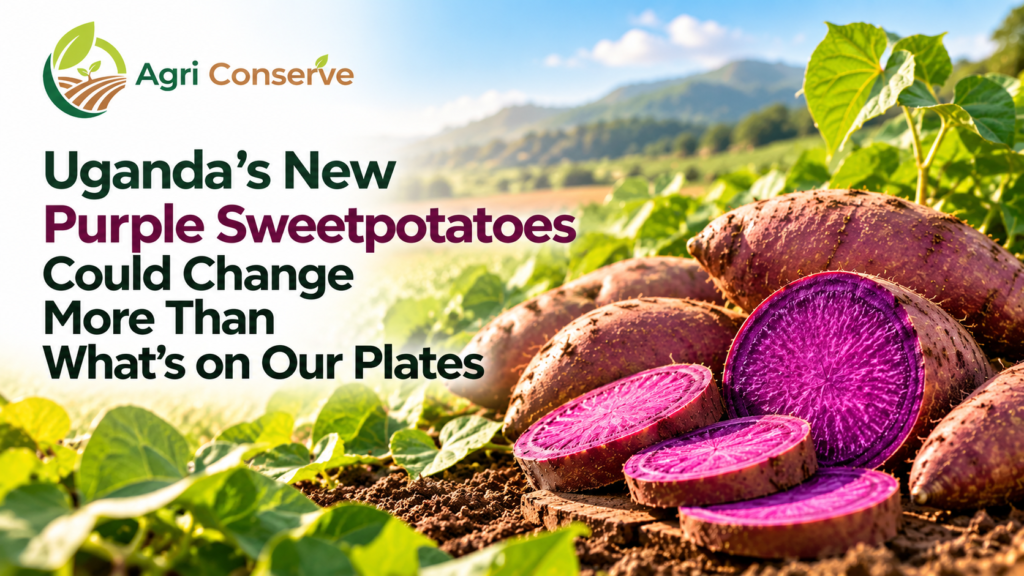

A sweetpotato with deep purple flesh might look unusual, but researchers in Uganda believe it could offer something valuable to farmers, food businesses and consumers.
Uganda’s National Agricultural Research Organisation (NARO) has introduced three new purple-fleshed sweetpotato varieties designed to combine nutritional value with agricultural productivity.
The varieties, named NAROSPOT-8P, NAROSPOT-9P and NAROSPOT-10P, were officially unveiled during World Food Day celebrations in Mbarara on October 16, 2026. NARO published details of the development on October 27.
The launch marks an important step in moving agricultural research from experimental fields into wider farming and food-processing systems.
What Makes These Sweetpotatoes Different?
The most noticeable feature is their colour.
Unlike conventional white or orange-fleshed sweetpotatoes, these varieties contain anthocyanins, natural pigments responsible for their rich purple appearance.
Anthocyanins also have antioxidant properties, making them interesting to food scientists studying the nutritional characteristics of different crops.
According to NARO, the new sweetpotatoes also contain dietary fibre and nutrients including vitamins A and C and zinc.
The researchers designed the varieties to offer more than nutritional benefits. They also prioritised agricultural performance and suitability for processing.
That combination could make the crop attractive to farmers who want access to markets beyond fresh vegetable sales.
The Opportunity Goes Beyond Fresh Produce
Sweetpotatoes are commonly boiled, roasted or incorporated into traditional dishes.
But Uganda’s researchers see opportunities to turn these purple varieties into a wider range of products.
Their distinctive colour and composition could make them suitable for flour, bakery products, beverages and natural food colourings.
For food processors, purple sweetpotato ingredients could provide an alternative to some conventional colouring ingredients while offering a distinctive appearance.
For farmers, the potential benefit is economic.
If local businesses begin purchasing these varieties for processing, growers could have additional opportunities to sell their harvests.
However, creating a successful market will require reliable demand, appropriate processing facilities and consistent crop quality.
From Research Stations to Farmers’ Fields
The varieties were developed through NARO’s National Crops Resources Research Institute, with support from its agricultural research network.
Uganda’s National Variety Release Committee formally approved them in February 2026.
Their public launch in October represents the next stage of the process: encouraging wider access to planting material and connecting the varieties with farmers and processors.
This distinction matters because developing a successful crop variety is only part of agricultural innovation.
Farmers also need quality planting material, production knowledge and buyers willing to purchase the crop.
NARO says it is working to improve access to planting vines through its research institutes and agricultural partners.
Why Women and Young Farmers Matter
Sweetpotato production and small-scale processing provide livelihood opportunities for rural households across Uganda.
NARO believes the new varieties could offer additional opportunities for women and young entrepreneurs involved in cultivation, processing and food businesses.
A farmer might sell fresh purple sweetpotatoes, while another local enterprise could process them into flour or other ingredients.
These activities could create more value within agricultural communities rather than relying entirely on the sale of raw produce.
Still, commercial success will depend on market acceptance and whether the additional value reaches farmers themselves.
A Different Way to Think About Crop Improvement
Agricultural research often focuses on increasing yields or improving resistance to pests and diseases.
Those goals remain important, but this development highlights another possibility.
A crop variety can also be designed with consumers, nutrition and food-processing markets in mind.
Uganda’s purple sweetpotatoes illustrate how plant breeding can connect agricultural production with opportunities further along the food supply chain.
The varieties are newly released, so their long-term performance and commercial adoption still need to be established.
But the direction is promising.
The future of crop improvement may not simply be about growing more food. It may also be about developing crops that farmers can sell in more ways, creating greater value from the same harvest.