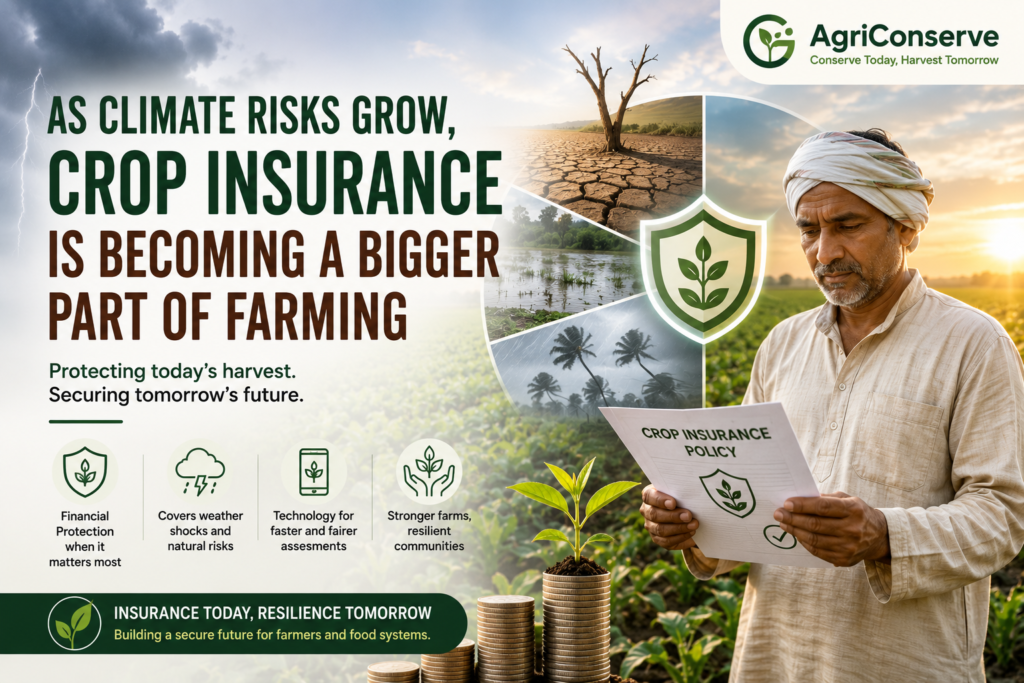

For a farmer, one bad season can erase months of work.
A drought, flood, cyclone or unexpected heatwave can damage a crop just days before harvest. As weather becomes more unpredictable, protecting farm income is becoming almost as important as improving crop yields.
That is why crop insurance is receiving renewed attention this year.
In India, farmers in Andhra Pradesh are enrolling in larger numbers for crop insurance as concerns grow over the possible effects of El Niño on rainfall and agriculture. The state has intensified efforts to reach eligible farmers and expand coverage ahead of potential weather-related losses.
The issue is much bigger than one state or one country. Farmers across Asia, Europe, Africa and the Americas are dealing with increasingly difficult weather conditions, making financial protection an important part of climate-resilient agriculture.
Insurance Cannot Prevent a Crop Loss — But It Can Help a Farmer Recover
Crop insurance does not protect the crop itself. Its value comes after something goes wrong.
India’s Pradhan Mantri Fasal Bima Yojana covers certain yield losses and specified weather-related risks. Depending on the situation, the system can also cover localized events such as hailstorms, inundation and landslides, as well as certain post-harvest losses.
This can give farmers a financial cushion when production falls sharply.
Technology is also changing how these losses are assessed. India’s government is expanding systems such as YES-TECH and the Weather Information Network and Data System (WINDS), which use technology and weather data to improve crop-loss assessment and agricultural advisories.
The Bigger Shift Is Toward Preparedness
Insurance is only one part of the answer.
Farmers also need better weather forecasts, drought-tolerant varieties, efficient irrigation, healthy soils and timely agricultural advice. India’s agricultural authorities are already promoting measures such as crop diversification, short-duration varieties, micro-irrigation and water conservation in districts considered vulnerable to El Niño-related risks.
The same principle applies globally: resilience is strongest when financial protection is combined with better farming practices.
For agriculture, the goal should not simply be to recover after a disaster. It should be to make farms better prepared before the next one arrives.
As climate risks continue to change the way farmers plan each season, crop insurance may become an increasingly important safety net—but the real strength of farming will still come from combining good science, better information and practical support for farmers.