

Introduction
Agriculture has always played a vital role in Southeast Asia’s economy. Yet, despite its importance, the sector continues to face challenges related to productivity, financing, and technology adoption. Today, AgriTech innovations are emerging as a powerful solution that could reshape the future of farming in the region. With the right implementation, digital agriculture tools have the potential to drive large-scale economic growth while improving the livelihoods of millions of farmers.
The Untapped Economic Opportunity
Agriculture contributes nearly 15 percent to Southeast Asia’s total GDP and supports around 30 to 40 percent of the workforce. However, the sector still relies heavily on traditional practices, with limited use of modern digital tools.
This gap presents a significant opportunity. If AgriTech solutions are widely adopted, the region could see an estimated economic boost of more than $90 billion annually by 2033. Such growth would not only strengthen rural economies but also position agriculture as a key driver of long-term development.
Investment Landscape and Market Correction
In recent years, AgriTech has attracted strong investor interest. Funding peaked at approximately $750 million in 2022. However, by 2025, investments declined sharply by nearly 70 percent.
While this drop may appear concerning, industry experts interpret it differently. Rather than signaling a decline in potential, it reflects a shift toward more sustainable and scalable business models. Investors are now focusing on long-term value creation instead of rapid expansion. This phase could lead to stronger, more resilient AgriTech solutions in the coming years.
India’s Experience as a Strategic Advantage
India offers a practical roadmap for Southeast Asia’s AgriTech growth. With its strong ecosystem in agricultural startups, digital finance, and governance frameworks, India has already demonstrated how technology can improve farming outcomes.
Organizations like Omnivore, Beanstalk AgTech, and Briter are actively promoting cross-border collaboration. These partnerships enable knowledge sharing and help adapt proven solutions to local contexts.
In particular, digital lending platforms and farm insurance models have proven effective in improving farmers’ access to credit and reducing financial risks.
Key AgriTech Solutions Driving Change
1. Digital Financial Services
Technology-driven lending and insurance platforms are simplifying access to capital. Farmers can now secure loans faster and protect their crops against uncertainties with greater ease.
2. Precision Agriculture
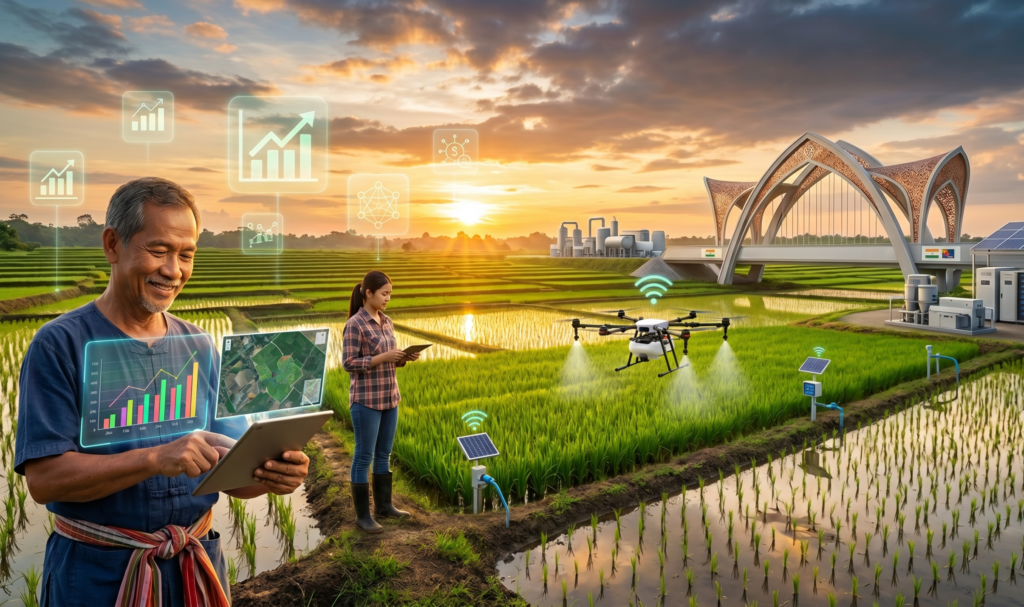
Advanced tools such as sensors, satellite data, and analytics help farmers use resources like water and fertilizers more efficiently. This leads to higher productivity and reduced operational costs.
3. Data-Driven Marketplaces
Digital marketplaces are connecting farmers directly with buyers. By reducing dependency on intermediaries, these platforms help farmers receive better prices and improve transparency across the supply chain.
Building a Resilient and Sustainable Future
AgriTech is not just about increasing output. It also plays a crucial role in building resilience against climate change and market volatility. By integrating technology into farming practices, Southeast Asia can create a more sustainable agricultural system that supports both economic growth and environmental stability.
Conclusion
Southeast Asia stands at a critical point in its agricultural journey. With the right investments, policies, and collaborations, AgriTech can transform the sector into a powerful engine of growth. The combination of digital innovation and regional cooperation has the potential to unlock new opportunities, improve farmer livelihoods, and shape a more sustainable future for the region.
