
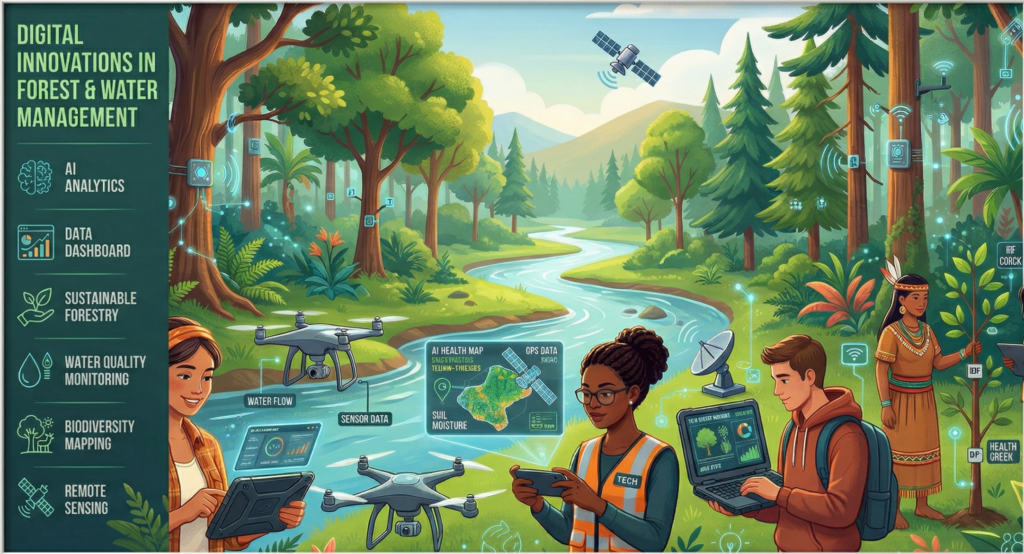
The way we manage forests and water resources is changing rapidly. Digital innovation is playing a key role in making environmental systems more transparent, measurable, and inclusive. A recent global discussion led by the Food and Agriculture Organization highlighted how technology can support sustainable development while addressing social and environmental challenges.
This conversation, held ahead of International Day of Forests and World Water Day 2026, brought together experts from across the world to explore how digital tools can reshape the future of natural resource management.
Key Takeaways from the Global FAO Event
On March 19, 2026, global leaders, researchers, and policymakers gathered to examine the deep connections between forests, water systems, economies, and social structures. The discussions focused on how digital technologies can make complex environmental processes easier to understand and manage.
One of the central ideas was simple but powerful. Many natural processes remain invisible or poorly measured. Without clear data, it becomes difficult to create effective policies. Digital solutions can change that by turning hidden patterns into actionable insights.
The Critical Link Between Forests and Water
Forests are essential for maintaining healthy water systems. They regulate water flow, protect watersheds, and support agricultural productivity. However, these benefits are often underestimated because they are not always visible or easy to measure.
With the help of digital tools, governments and organizations can now monitor how forests influence water availability and quality. This allows for better planning and stronger policies aimed at reducing deforestation and improving water security.
Accurate data also helps decision makers understand long term environmental impacts, making it easier to balance economic growth with sustainability.
Addressing Gender Inequality in Water Management
In many parts of the world, women are primarily responsible for managing water at the household and community level. Despite this, they often face limited access to technology, data, and leadership opportunities.
Insights from the World Water Development Report 2026 highlight these inequalities. As digital systems become more common, there is a risk that existing gaps could widen if inclusion is not prioritized.
Tools like AQUASTAT are helping bridge this divide by improving access to reliable data. When designed inclusively, digital platforms can empower women and support more equitable decision making.
The Expanding Role of Technology in Sustainability
Technologies such as artificial intelligence, data platforms, and remote sensing are transforming how environmental data is collected and used. However, technology alone is not enough.
For digital systems to be effective, they require accurate data, skilled users, and strong governance. When combined with local knowledge and community participation, these tools can create meaningful and lasting impact.
This integrated approach supports global efforts like the United Nations Sustainable Development Goals, which aim to create a more balanced and sustainable future for all.
Moving Toward a More Inclusive and Sustainable Future
Digital innovation offers a unique opportunity to rethink how we manage forests and water resources. By improving data visibility and promoting inclusive access, technology can help create systems that are both efficient and fair.
The key lies in ensuring that these innovations are designed for everyone. When technology, policy, and community knowledge come together, the result is not just better resource management but a stronger foundation for long term sustainability.
