
Introduction
Agriculture in 2026 has moved far beyond traditional practices. Farming is no longer limited to preparing the land and waiting for harvest. Today, advanced technologies such as artificial intelligence, data analytics, and digital tools are changing how farms function. These innovations are helping farmers reduce uncertainty, improve productivity, and manage resources more effectively.
This transformation is playing a crucial role in strengthening global food security. With rising population levels, climate disruptions, and limited natural resources, modern agriculture needs smarter and more efficient solutions. Agri-Tech is emerging as a key answer to these challenges.
What Is Smart Farming
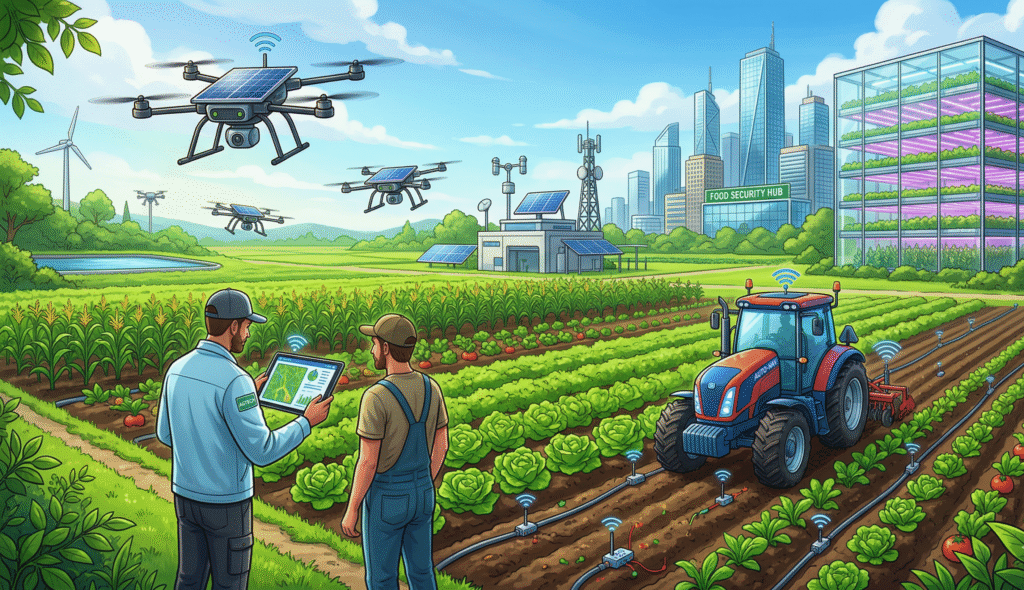
Smart farming is the use of connected technologies to monitor and manage agricultural operations in real time. It involves tools such as sensors, drones, GPS-enabled machinery, and cloud-based platforms that collect and analyze farm data.
Instead of relying on assumptions, farmers can now make precise decisions based on actual field conditions. This allows better control over crops, soil health, weather patterns, and livestock management.
Key Applications of Smart Farming
- Sensors that measure soil moisture and nutrient levels to guide irrigation and fertilization
- GPS-based systems that adjust the amount of seeds, fertilizers, and pesticides automatically
- Drones equipped with cameras to detect early signs of crop stress, pests, or diseases
Artificial Intelligence as a Farming Assistant
Artificial intelligence is becoming a valuable support system for farmers. It analyzes large volumes of data, including satellite images, weather forecasts, and historical crop performance, to provide accurate recommendations.
AI can help farmers:
- Predict pest attacks and plant diseases
- Decide the best time for planting and harvesting
- Optimize the use of fertilizers and water
Many modern platforms also allow farmers to ask questions in simple language and receive practical advice. This makes technology accessible even to those who are not familiar with complex systems.
Automation and Robotics in Agriculture
Automation is gradually becoming more common in farming due to improvements in technology and reduced costs. Machines such as autonomous tractors, robotic harvesters, and automated weed control systems are being introduced across different regions.
These innovations help:
- Reduce dependence on manual labor
- Increase operational efficiency
- Address labor shortages during peak seasons
In countries like India, smaller and affordable machines such as seeders and sprayers are gaining popularity because they fit easily into existing farming practices.
Data-Driven Food Security
Agri-Tech is making food systems more reliable and resilient by using real-time data. Continuous monitoring across farms and supply chains allows better planning and early problem detection.
How Data Improves Food Systems
- Early warning systems can identify drought risks or pest outbreaks
- Governments and organizations can respond quickly with support and resources
- Digital platforms connect farmers directly with buyers, reducing losses after harvest
This approach ensures that food production and distribution become more stable and predictable.
Sustainability and Efficient Resource Use
Modern farming is not only focused on increasing output but also on using resources responsibly. Smart technologies enable farmers to reduce waste and minimize environmental impact.
Examples include:
- Precision irrigation systems that save water
- Targeted pesticide use that reduces chemical pollution
- Monitoring tools that track soil health and carbon footprint
These practices support sustainable agriculture and help farmers meet environmental standards while improving long-term productivity.
Agri-Tech Growth in India and Worldwide
India is rapidly adopting Agri-Tech solutions, with several states promoting innovation in farming. Regions like Telangana are investing in digital agriculture, AI-based crop monitoring, and farmer-focused platforms.
At the same time, global trends such as vertical farming and urban agriculture are gaining momentum. These systems use controlled environments, artificial lighting, and efficient water cycles to grow crops in cities where traditional farming space is limited.
Challenges in Adopting Agri-Tech
Despite its benefits, Agri-Tech adoption still faces several challenges, especially in developing regions.
Major Barriers
- High initial investment costs
- Limited digital literacy among farmers
- Poor internet connectivity in rural areas
- Small and fragmented landholdings
Addressing these issues is essential for wider adoption and long-term success.
Opportunities for the Future
To unlock the full potential of Agri-Tech, a collaborative approach is required.
Key Focus Areas
- Developing affordable and scalable solutions
- Providing training and technical support to farmers
- Strengthening partnerships between government and private sectors
- Ensuring data protection and fair access to digital platforms
With the right strategies, Agri-Tech can significantly improve global food production and farmer livelihoods.
Conclusion
Smart farming in 2026 represents a major shift in how agriculture is practiced. By combining technology with traditional knowledge, farmers can achieve better productivity, sustainability, and resilience.
As challenges like climate change and population growth continue to impact food systems, adopting modern agricultural solutions is no longer optional. It is a necessary step toward securing the future of global food supply.
