
Smallholder farmers are the backbone of global food production, contributing more than one-third of the world’s total supply. Despite this, they often face limited access to resources, technology, and financial protection. In 2026, digital innovation is beginning to close this gap.
Affordable and accessible tools are helping farmers improve productivity, reduce risks, and make smarter decisions. From precision agriculture to AI-powered solutions and mobile insurance, these advancements are reshaping the future of farming in developing regions.
Let’s explore the top three digital innovations making a real impact.
Precision Agriculture Tools: Smarter Farming with Data
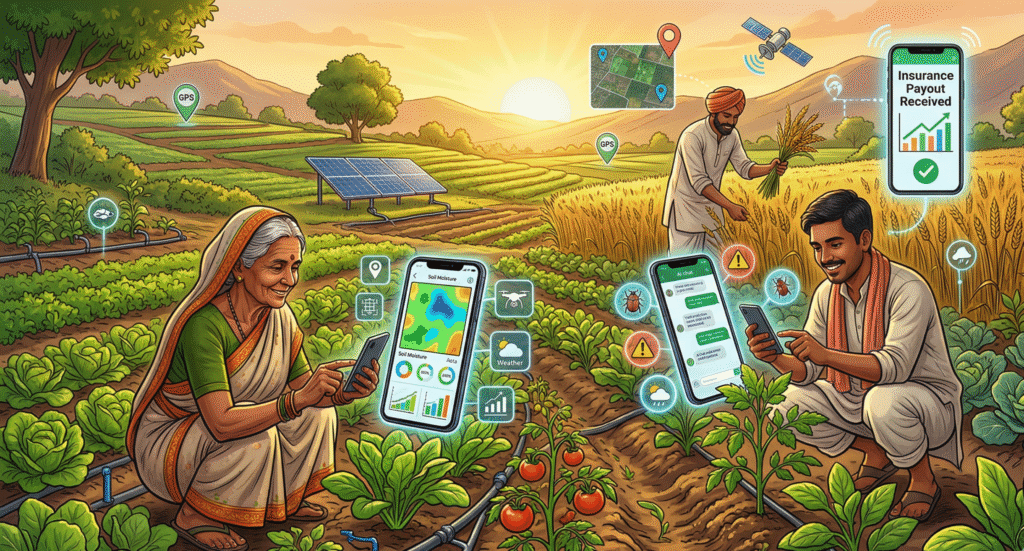
Precision agriculture is helping smallholder farmers move from guesswork to data-driven decisions. By using technologies such as sensors, drones, satellite imagery, and mobile applications, farmers can monitor their fields in real time.
These tools provide detailed insights into soil health, crop conditions, and weather patterns. Farmers can view farm maps that highlight variations in crop performance and receive customized recommendations for irrigation, fertilizers, and pest control.
Technologies like GPS and IoT sensors also enable more accurate planting, spraying, and watering. This targeted approach reduces resource wastage and improves efficiency. In many cases, farmers have reported yield increases of 10 to 15 percent while lowering input costs.
AI-Powered Farm Assistants: Intelligent Decision Support
Artificial intelligence is becoming a valuable partner for smallholder farmers. AI-powered farm assistants analyze data from multiple sources, including satellites and on-ground sensors, to deliver actionable insights.
These tools can forecast yields, identify crop diseases early, and recommend timely interventions. Mobile applications such as Plantix and FarmSense allow farmers to diagnose plant health issues using just a smartphone camera.
The impact is significant. Farmers using these tools often experience improved crop outcomes, with some cases showing up to 25 percent higher yields and a substantial reduction in pest-related losses. Additionally, early detection helps minimize the need for excessive chemical use, saving both money and the environment.
Mobile-Based Insurance: Financial Security in Farmers’ Hands
Access to insurance has traditionally been a challenge for smallholder farmers, especially in remote areas. Mobile-based insurance is changing this by offering simple and accessible solutions through smartphones.
Farmers can now purchase low-cost insurance policies and receive quick payouts directly on their mobile devices. These services are often integrated with platforms like M-Pesa, making transactions seamless and efficient.
This innovation helps farmers manage risks related to extreme weather events or crop failures. With financial protection in place, they are more willing to experiment with new seed varieties and farming techniques, ultimately improving resilience and long-term productivity.
Conclusion: A Digital Future for Smallholder Farming
Digital innovation is no longer limited to large-scale agriculture. In 2026, smallholder farmers are increasingly benefiting from technologies that are affordable, practical, and easy to use.
Precision agriculture tools, AI-driven assistants, and mobile insurance solutions are empowering farmers to make better decisions, reduce losses, and increase yields. As adoption continues to grow, these technologies will play a crucial role in strengthening global food systems and supporting sustainable agriculture.
