

Introduction
As industries search for smarter ways to reduce environmental impact, an innovative approach from the Netherlands is gaining attention. By reusing waste heat generated from Bitcoin mining, Dutch growers are finding a practical solution to heat greenhouses while reducing dependence on fossil fuels. This unique combination of digital technology and agriculture presents a promising step toward energy efficiency and sustainable farming.
Innovative Heat Reuse in Agriculture
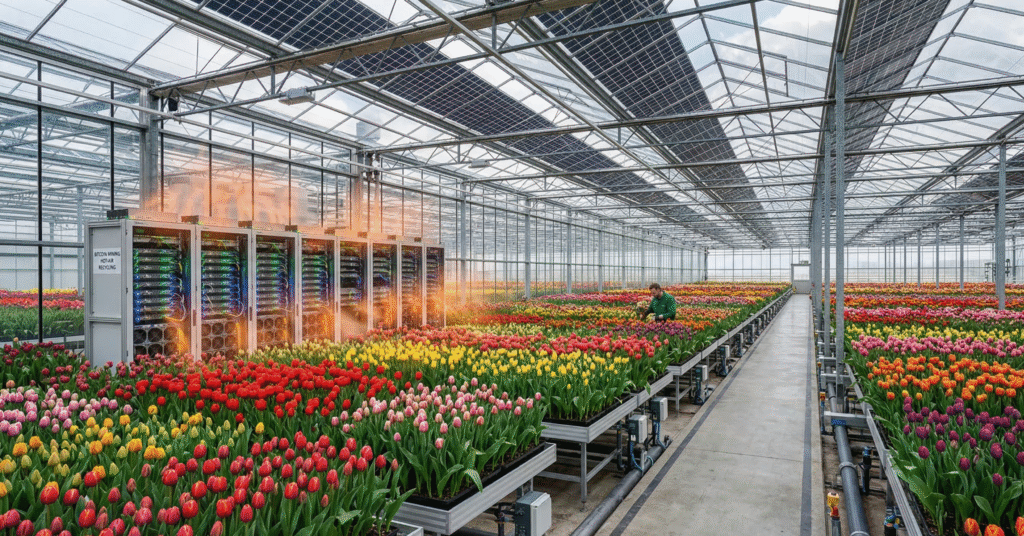
In key flower-growing regions of the Netherlands, farmers have started redirecting heat produced by Bitcoin mining systems into their greenhouses. These mining machines perform complex calculations to validate cryptocurrency transactions, and in doing so, they release a significant amount of heat.
Instead of allowing this heat to go to waste, growers channel it into greenhouse environments. This helps maintain consistent temperatures required for cultivating tulips and other crops, especially during colder months. As a result, farmers can significantly cut down on their use of natural gas, which has traditionally been a major energy source for greenhouse heating.
Benefits for Greenhouse Growers
Heating is one of the largest operational costs in greenhouse farming. During winter, maintaining optimal temperatures becomes even more expensive due to increased reliance on fossil fuels.
By integrating Bitcoin mining into their operations, farmers benefit in two key ways. First, they reduce their heating expenses by utilizing waste heat. Second, they generate an additional income stream through cryptocurrency mining. This dual advantage creates a more efficient and economically viable farming model.
Industry experts have pointed out that this system creates a balanced cycle where energy use serves multiple purposes, making it both practical and resource-efficient.
How the System Works
Bitcoin mining involves specialized hardware that runs continuously, consuming electricity and producing heat as a byproduct. In traditional setups, this heat is simply released into the environment.
In this innovative model, the heat is captured and redirected into greenhouse systems. It is then used to support the growth of crops such as tulips, tomatoes, and cucumbers. When combined with renewable energy sources like solar power, the overall environmental benefits increase even further by lowering total emissions.
Broader Potential of Circular Energy Use
This approach reflects a growing trend known as circular energy use, where waste from one process becomes a valuable resource for another. Researchers have highlighted that a large portion of energy used in Bitcoin mining is ultimately converted into heat, making it ideal for reuse in agriculture or even residential heating systems.
While Bitcoin mining often faces criticism for its high energy consumption, solutions like this demonstrate how it can be integrated into sustainable systems. By rethinking how energy outputs are used, industries can move toward more responsible practices.
Global Relevance and Future Scope
The Netherlands is already known for its advanced greenhouse technology and strong presence in global flower exports. This makes it an ideal location for testing and scaling such innovations.
Similar concepts are being explored worldwide, including applications in aquaculture and district heating systems. Although challenges such as electricity costs and infrastructure design remain, the potential for combining digital operations with agriculture is significant.
Conclusion
The use of Bitcoin mining heat to warm greenhouses offers a practical example of how technology and sustainability can work together. By turning waste into a resource, this model not only reduces environmental impact but also improves economic efficiency for farmers.
As global industries continue to seek sustainable solutions, this Dutch initiative provides a valuable blueprint for integrating modern technology with traditional practices.
