
Agriculture today faces increasing pressure from climate change, soil degradation, and rising food demand. As a result, farmers and researchers are exploring better ways to produce food while protecting natural resources. One approach gaining global attention is regenerative farming.
Unlike traditional farming systems that mainly focus on maintaining productivity, regenerative farming aims to restore and strengthen the natural systems that support agriculture. By improving soil health and encouraging biodiversity, this approach helps farms remain productive for generations while reducing environmental impact.
Understanding the Principles of Regenerative Farming
At the heart of regenerative farming is the idea that healthy soil leads to healthy crops and resilient ecosystems. Farmers following this approach adopt practices that support natural biological processes instead of relying heavily on external chemical inputs.
One of the most important principles is minimal soil disturbance. Reducing tillage protects soil structure and prevents the loss of organic matter. When soil is left relatively undisturbed, beneficial microorganisms thrive and help cycle nutrients that crops need for growth.
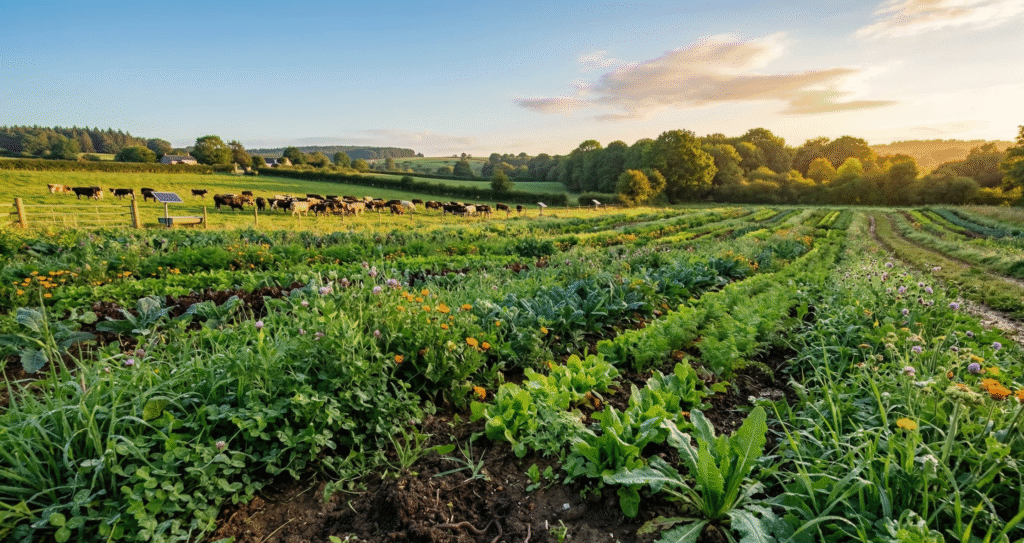
Another key practice is diverse crop rotation. Growing different crops throughout the year improves soil fertility and breaks pest and disease cycles. In addition, farmers often plant cover crops during off seasons. These plants protect the soil surface, add organic material, and improve water retention.
Many regenerative farms also integrate livestock grazing and agroforestry systems. Grazing animals can naturally fertilize soil and stimulate plant growth, while trees planted within farmland provide shade, increase biodiversity, and improve long term soil stability. Together, these practices mimic natural ecosystems and create more balanced agricultural landscapes.
Benefits for Farmers and the Environment
Regenerative farming offers several advantages for both farmers and the environment. One of the most significant benefits is improved soil health. Soils rich in organic matter can store more water and nutrients, which helps crops survive dry conditions and reduces the need for synthetic fertilizers.
Healthier soils often translate into better crop performance. In some regions, research suggests that regenerative practices can increase yields significantly, sometimes by as much as 200 percent under favorable conditions. At the same time, farmers may spend less on chemical inputs such as pesticides and fertilizers, which lowers production costs.
Environmental benefits are equally important. Regenerative agriculture plays a role in carbon sequestration, where carbon dioxide from the atmosphere is stored in the soil. This process helps reduce greenhouse gas levels and supports global climate goals. Furthermore, farms that follow regenerative methods provide better habitats for insects, birds, and other wildlife.
Considering that nearly 34 percent of the world’s farmland is affected by land degradation, regenerative farming offers a practical way to restore damaged soil and maintain long term agricultural productivity.
Real World Impact on Farming Communities
The impact of regenerative agriculture is already visible in many parts of the world. For smallholder farmers, especially in developing regions, these practices can improve both food security and income stability.
By growing a wider range of crops, farmers reduce their dependence on a single harvest. This diversification allows them to produce grains, vegetables, and other valuable crops throughout the year. As a result, they become less vulnerable to climate shocks or market fluctuations.
In parts of Africa, experts estimate that adopting regenerative practices could increase crop yields by 13 to 40 percent by 2040. Such improvements can play a major role in strengthening rural economies and supporting long term climate adaptation.
Large agricultural companies are also showing interest in regenerative agriculture. Organizations such as Syngenta are promoting regenerative approaches as a natural evolution of modern farming. These initiatives often combine new technologies with traditional knowledge that farmers have used for generations.
Challenges in the Transition
Despite its benefits, shifting to regenerative farming requires time, education, and support. Farmers may need training to learn new soil management techniques and crop planning strategies. In some cases, the transition also involves initial investments in equipment or new farming systems.
However, many farmers report that once the system becomes established, productivity stabilizes and can even surpass conventional methods. Over time, the reduced cost of fertilizers and pesticides can offset early investments.
The Future of Regenerative Agriculture
Consumer awareness is also pushing the growth of regenerative agriculture. Surveys show that nearly 80 percent of shoppers in the United States prefer products labeled as regenerative or environmentally responsible. This growing demand encourages food companies and retailers to support farmers who adopt sustainable practices.
At the same time, governments and organizations around the world are launching programs to accelerate adoption. These initiatives include financial incentives, policy support, and advanced technologies such as artificial intelligence tools that help farmers monitor soil health and crop performance.
Conclusion
Regenerative farming represents a promising shift in the way agriculture interacts with nature. By focusing on soil restoration, biodiversity, and long term ecosystem health, this approach creates a farming system that benefits both farmers and the environment.
As more producers adopt regenerative practices and consumers support sustainable food systems, agriculture can move toward a future that is productive, resilient, and environmentally responsible.
