
Agriculture is facing a major shift. Farmers today are expected to produce more food while also protecting natural resources. Sustainable farming offers a practical solution to this challenge. It focuses on improving productivity while preserving soil, water, and biodiversity for future generations.
These practices also help farmers deal with serious issues such as climate change, soil degradation, and water scarcity. When applied correctly, sustainable methods can make farming more resilient, cost effective, and profitable over the long term.
Below are some important sustainable farming practices that farmers around the world are adopting.
Crop Rotation Improves Soil Health
Crop rotation is one of the simplest and most effective sustainable farming techniques. It involves planting different crops on the same land in a planned sequence instead of growing the same crop every season.
For example, farmers can plant nitrogen fixing crops such as legumes after growing heavy nutrient consuming crops like wheat or maize. Legumes naturally restore nitrogen levels in the soil.
This practice also breaks pest and disease cycles. Over time, crop rotation improves soil fertility, reduces erosion, and increases overall farm productivity.
Cover Cropping Protects Soil
Cover crops are planted between main growing seasons to protect the soil. Instead of leaving fields empty, farmers grow plants like clover, rye, or mustard to cover the land.
These crops help prevent soil erosion caused by wind and rain. They also add organic matter to the soil when they decompose.
Another important benefit is weed control. Cover crops naturally suppress weeds and reduce the need for chemical herbicides. In addition, they improve microbial activity, which supports healthy soil structure.
Integrated Pest Management Reduces Chemical Use
Integrated Pest Management, often called IPM, focuses on controlling pests through natural and preventive methods rather than relying only on pesticides.
Farmers regularly monitor pest populations and use strategies such as biological control, crop rotation, resistant crop varieties, and pest traps.
Beneficial insects like ladybugs and spiders help control harmful pests naturally. This approach protects the environment, reduces chemical residue on crops, and keeps farming ecosystems balanced.
Water Conservation Techniques in Agriculture
Efficient water management is essential for sustainable farming, especially in regions that face water shortages.
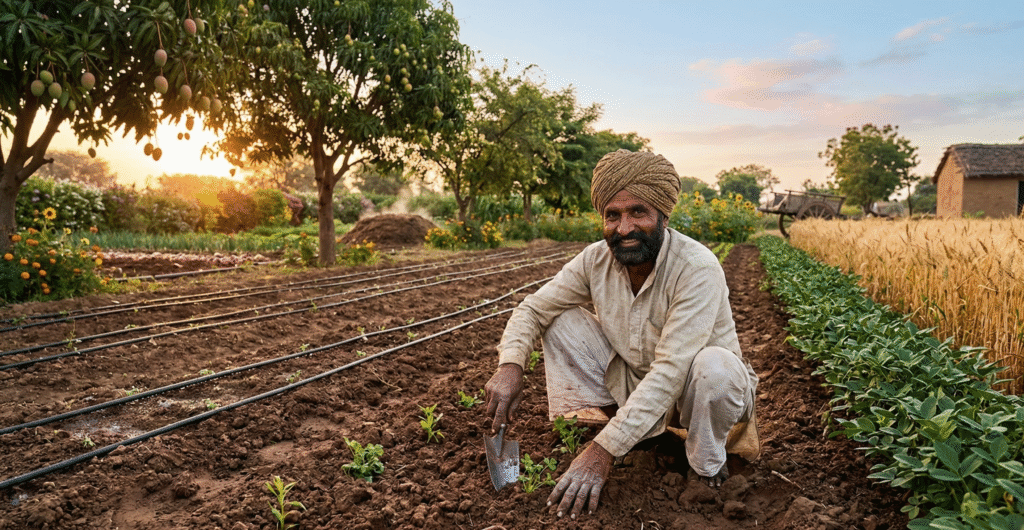
Drip irrigation is one of the most effective solutions. It delivers water directly to plant roots, which reduces evaporation and water loss compared to traditional flood irrigation.
Mulching is another useful method. Organic materials such as straw or crop residue cover the soil surface and help retain moisture. Farmers can also choose drought tolerant crop varieties that require less water and perform well in dry conditions.
Organic Nutrient Management
Healthy soil needs proper nutrients. Instead of relying entirely on synthetic fertilizers, sustainable farming encourages organic nutrient sources.
Composting farm waste, crop residues, and animal manure returns valuable nutrients to the soil. Another technique, vermicomposting, uses earthworms to break down organic matter quickly and create nutrient rich compost.
These methods improve soil fertility, increase microbial life, and support long term soil health.
Agroforestry Combines Trees and Crops
Agroforestry integrates trees with crops or livestock on the same land. This system creates a balanced farming environment that resembles natural ecosystems.
Trees provide shade, reduce soil erosion, and improve soil fertility. Some trees also fix nitrogen in the soil.
In addition, agroforestry offers farmers additional income sources such as fruits, timber, or medicinal plants. Trees also attract pollinators and beneficial wildlife that support farm productivity.
No Till Farming Preserves Soil Structure
Traditional plowing can disturb soil structure and release stored carbon into the atmosphere. No till farming avoids this problem by reducing soil disturbance.
Farmers use specialized equipment to plant seeds directly into crop residue from previous harvests. This layer protects the soil surface and maintains moisture.
No till farming also encourages earthworm activity, which naturally improves soil aeration and water infiltration.
Biodiversity Strengthens Farm Ecosystems
Biodiversity plays an important role in sustainable agriculture. Farms that grow a variety of crops tend to be more stable and resistant to pests and diseases.
Intercropping is a common method where two or more crops grow together in the same field. For example, maize can be grown alongside beans, which helps improve soil fertility and reduces pest attacks.
Farmers can also plant flowering strips around fields to attract pollinators such as bees and butterflies. These insects help improve crop pollination and yield.
Moving Toward Sustainable Agriculture
Adopting sustainable farming practices does not require farmers to change everything at once. Many farmers begin with simple and low cost techniques such as crop rotation, composting, or water conservation.
Over time, these practices build healthier soils, reduce production costs, and create a more resilient farming system.
In India, especially in agricultural regions like Madhya Pradesh, farmers can use local resources and traditional knowledge to adopt sustainable methods. This approach not only supports farm productivity but also contributes to national sustainability goals.
Sustainable farming is not just about protecting the environment. It is also about ensuring that agriculture remains productive and profitable for generations to come.
