
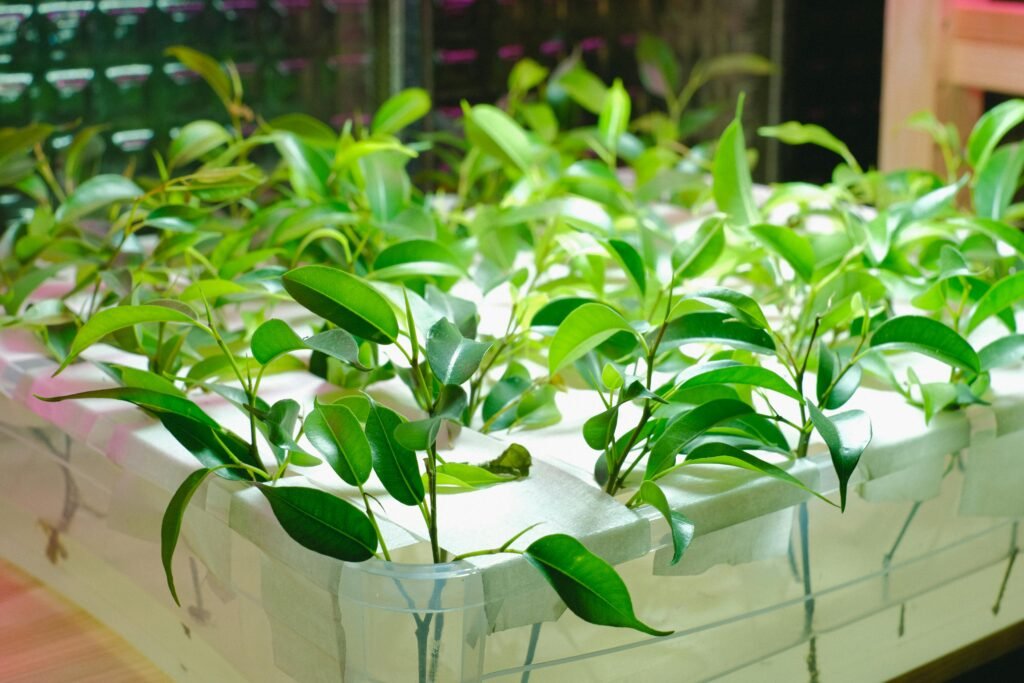
Researchers have introduced a new Internet of Things based framework designed to improve soilless precision farming. This innovation focuses on hydroponic agriculture and aims to address major challenges such as water scarcity, limited land availability, and the growing demand for sustainable food production. The framework shows strong potential for reshaping urban farming and supporting global food security.
Smart Soilless Farming Powered by IoT
The proposed system uses a network of interconnected sensors to continuously monitor critical growing conditions. These include pH balance, nutrient concentration, temperature, humidity, and light intensity. The framework is particularly suited for vertical farms and controlled environment agriculture setups commonly found in urban areas.
Collected data is processed in real time through edge computing units. Based on sensor readings, the system automatically regulates irrigation, oxygen supply, and nutrient delivery. This automated approach reduces manual intervention and ensures optimal growing conditions for crops throughout their lifecycle.
One of the most significant outcomes of this system is its ability to dramatically reduce water consumption. Compared to traditional soil based farming, the framework can lower water usage by as much as 90 percent, making it highly suitable for regions facing water shortages.
Benefits for Urban and Commercial Growers
Soilless IoT driven farming offers several advantages for urban growers. Crops can be produced year round in compact spaces such as rooftops, warehouses, or indoor farms. This makes it possible to grow fresh produce closer to consumers, reducing transportation costs and post harvest losses.
Artificial intelligence driven analytics further enhance the system by identifying early signs of plant stress and optimizing growth cycles. Leafy greens and herbs are especially well suited for this method, as they thrive in hydroponic environments and have shorter harvesting periods.
The framework is designed to be scalable. It can support small household systems as well as large commercial farming operations. This flexibility allows it to contribute meaningfully to food production in densely populated cities.
Overcoming Adoption Challenges
Despite its advantages, soilless precision farming faces barriers such as high setup costs and technical complexity. The researchers address these concerns by proposing affordable sensor designs that reduce initial investment requirements.
To improve usability, the framework includes mobile applications that allow farmers to monitor and manage their systems easily. These applications present data in a clear and accessible format, making the technology suitable even for users with limited technical expertise.
Energy efficiency is another key focus. The integration of solar power reduces dependency on unstable electricity grids, while resilient network design ensures continuous operation in remote or power constrained regions.
A Step Toward Sustainable Food Production
This IoT based soilless farming framework represents a significant step toward sustainable agriculture. By combining automation, data analytics, and resource efficiency, it offers a practical solution to modern agricultural challenges. As urban populations grow and natural resources become increasingly strained, such technologies may play a critical role in ensuring reliable and sustainable food systems worldwide.
